21 Passive Income Ideas That Actually Work (2026)

Last fact-checked: · Editorial standards
Here’s something most people don’t know. According to the Federal Reserve’s 2024 Economic Well-Being Report, 55% of American adults already earn non-labor income. That includes interest, dividends, rental income, and royalties. So if you’ve ever felt like everyone else is in on a secret you missed, the reality is they’re just chipping away at it one stream at a time.
Building real passive income ideas into your life doesn’t require a trust fund or a Silicon Valley exit. It requires picking the right streams for your situation and giving them room to grow.
In this guide, I’ll walk you through 21 passive income ideas that actually work in 2026, with current numbers, honest timelines, and a clear-eyed view of what each one demands. Whether you’ve got $50 or $50,000 to put to work, there’s something here for you. You can also explore some quick and simple ways to make $20 fast if you want to boost your income immediately while setting up long-term passive income streams.
What Counts as Passive Income (and What Doesn’t)
The IRS keeps a tight definition. Officially, passive income comes from rental property or a business where you don’t materially participate. Everything else, including dividends and interest, falls under “portfolio income” in tax terms.
In real-life conversation, though, “passive income” usually means any money that doesn’t tie you to an hourly clock. Royalties, ad revenue, dividends, rental cash flow, all of it counts in the way most people use the term.
Financial coach Todd Tresidder, quoted by Bankrate, puts it bluntly: passive income still involves work. You just do most of it up front. That mindset shift is the first thing that separates people who succeed at this from people who give up at month three.
Which Passive Income Ideas Actually Work in 2026?
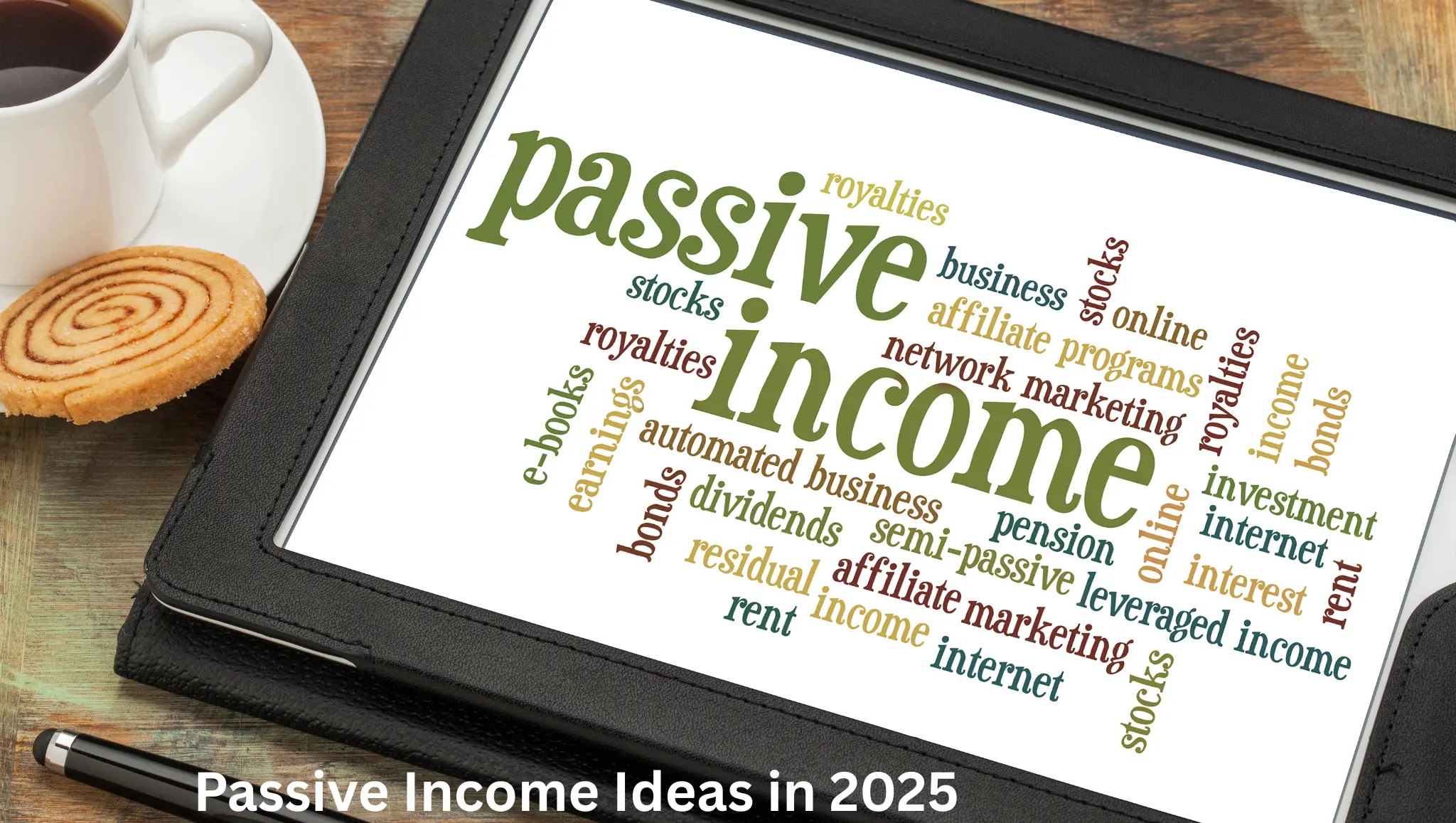
Not every “passive” idea deserves the label. The honest passive income ideas that actually work in 2026 fall into two camps: capital streams that reward money you already have, and effort streams that reward work you do once. The ideas that fail are the ones sold as effortless but that quietly demand a full-time job, like vending routes or a traditional rental.
| Idea | Startup | Time to pay | Truly passive? |
|---|---|---|---|
| High-yield savings | Money | Immediate | Yes |
| Dividend stocks / REITs | Money | Ongoing | Yes |
| Digital products | Low | 1 to 6 months | Mostly, after setup |
| Blog / affiliate site | Low | 12 to 24 months | Yes, eventually |
| Print-on-demand | Low | Weeks to months | Mostly |
| Rental property | High | Ongoing | Not really |
| Vending / laundromat | High | Ongoing | No, it is a job |
Read that last column first. If money is what you have, start at the top with savings and dividends. If time and effort are what you have, the digital and content ideas below are your lane. Everything in this guide is picked to actually pay, not just to sound good on a list.
Best Passive Income Ideas That Pay From Day One
These options put money in your pocket almost immediately, assuming you have some capital to deploy.
1. High-Yield Savings Accounts
Boring? Yes. Effective? Absolutely. As of May 2026, the top high-yield savings accounts pay around 4.21% APY (Axos Bank), while the national average is just 0.59%, according to Bankrate. That’s a seven-fold difference for the same product.
A $10,000 emergency fund at 4% earns roughly $400 a year for doing nothing. Online banks like Marcus, Ally, and Discover routinely top the rankings.
2. Dividend Stocks and ETFs
Companies distribute profits to shareholders through dividends, usually quarterly. The S&P 500’s current dividend yield is about 1.08%, but funds that target dividend payers, like Schwab’s SCHD or Vanguard’s VYM, push that yield higher.
Sam Dogen of Financial Samurai, an early retiree who reportedly earns $80,000 a year in passive income, points out that you’d need over $700,000 invested at the current S&P 500 yield to generate $10,000 annually in dividends. Start small, but start.
3. Treasury Bonds and CDs
With Federal Reserve rate cuts continuing through late 2025, yields have softened, but Treasury bills and high-yield CDs still offer returns of 3% to 4.5% with essentially zero credit risk. TreasuryDirect.gov lets you buy directly with no broker fees.
4. Real Estate Investment Trusts (REITs)
REITs are companies that own income-producing real estate. By law, they must distribute 90% of their taxable income to shareholders, making them a steady source of dividends. You can buy publicly-traded REITs through any brokerage account. Public Storage, Realty Income, and Prologis are among the biggest names.
Online Passive Income Ideas You Can Start From Home
If you’ve got more time than money, these online passive income ideas are where things get interesting.
5. Start a Niche Blog
Pick a topic, write helpful articles, build an audience, and monetize through display ads, affiliate links, and sponsored content. The catch? Blogs typically take 12 to 18 months to gain traction. The reward? Successful blogs in personal finance, parenting, and outdoor niches can generate four- and five-figure monthly incomes for years.
6. YouTube Channel
Video content has unmatched staying power. A tutorial uploaded today can still earn ad revenue five years from now. Channels in evergreen niches (cooking, finance, woodworking, language learning) compound beautifully over time.
7. Digital Products
Templates. Notion dashboards. Lightroom presets. Printables. Once you create a digital product, you can sell it infinite times at near-zero cost. Platforms like Etsy and Gumroad handle delivery automatically. Many beginner sellers report $50 to $300 per month within their first six months, scaling from there.
8. Self-Published Ebooks
Amazon KDP lets anyone publish. Single-book authors rarely strike gold, but writers with focused backlists of 5 to 10 titles in tight niches often earn steady monthly royalties.
9. Online Courses
Got expertise people want? Package it on Teachable, Thinkific, or Kajabi. The trick is solving a specific problem extremely well rather than building a vague “everything you need to know” course.
10. Affiliate Marketing
Recommend products, earn commissions on referred sales. Amazon Associates is the entry point, though specialty programs in software, finance, and fitness pay far higher commissions, sometimes 30% to 50% per sale.
11. Print-on-Demand
Design t-shirts, mugs, and posters. Services like Printful and Printify handle production, shipping, and customer service. You upload designs and collect a margin. Etsy is the most beginner-friendly storefront.
Passive Income Ideas With Little Money
No big savings cushion? These options work even from a starting balance of zero.
12. Cashback and Rewards Apps
Rakuten, Ibotta, and a solid 2% cashback card can quietly add hundreds of dollars to your year. Not life-changing, but it’s free money you’d otherwise leave on the table.
13. Rent Out a Spare Room
According to Zumper’s 2025 National Rent Report, a spare bedroom in major U.S. metros can fetch $600 to $1,800 per month. In New York City alone, splitting a two-bedroom can save you nearly $1,800 a month versus living solo.
14. Rent Your Car or Driveway
Turo lets you rent your car when you’re not using it. Apps like SpotHero turn your driveway into income, especially near stadiums, downtowns, and airports. Reddit users on Turo report earning several hundred dollars per month when managed well.
15. Stock Photography and Video
If you’ve got a phone with a decent camera, sites like Shutterstock and Adobe Stock pay royalties every time someone licenses your work. Specific, high-demand subjects (diverse business meetings, modern home offices, drone footage) consistently outperform generic landscapes.
16. Reselling and Flipping
Buy used textbooks at semester-end, resell them when demand peaks. The same logic works at thrift stores, estate sales, and Facebook Marketplace. It’s not 100% passive, but margins can be excellent, and you don’t need much starting capital.
Higher-Investment Passive Income Streams
These take more money to enter but can deliver substantial returns.
17. Rental Properties
The classic. Buy a property, rent it out, collect monthly cash flow. It’s not as hands-off as people pretend, but a good property manager gets you close. Markets like Indianapolis, Memphis, Cleveland, and parts of Texas still offer reasonable entry prices for first-time landlords.
18. Real Estate Crowdfunding
Want real estate income without dealing with toilets at midnight? Platforms like Fundrise let you invest as little as $10 in diversified real estate funds, typically targeting returns of 7% to 12% annually.
19. Peer-to-Peer Lending
Platforms like Prosper let you fund small loans to individuals. Returns can beat the stock market, but defaults happen, so spread your money across many small loans rather than betting big on a few.
20. Buying an Existing Online Business
Sites like Flippa and Empire Flippers list small online businesses with proven income. Buying skips years of building from scratch, but it requires due diligence to avoid lemons. Multiples typically run 30 to 40 times the monthly net profit.
21. Vending Machines
Bankrate’s data and personal stories on Reddit’s r/vending suggest a single well-placed machine can net $200 to $500 monthly. Build a route of 5 to 10 machines, and you’ve created a real micro-business.
How Passive Income Is Actually Taxed
This is where most articles are vague. Let’s get specific.
- Qualified dividends and long-term capital gains get favorable tax treatment, often 0%, 15%, or 20%, depending on your income.
- Interest from savings accounts and CDs is taxed as ordinary income at your marginal rate.
- Rental income is taxed as ordinary income, but you can offset it with depreciation and expenses.
- Affiliate, ad, and product sales income is generally treated as self-employment income, meaning you owe both income tax and self-employment tax (15.3%).
The IRS treats these very differently. Once your income grows past hobby level, talk to a CPA. The tax savings often pay the fee several times over.
How Long Until Passive Income Actually Pays Off?
Realistic timelines, based on what actually happens:
- Same week: High-yield savings, dividend stocks, REITs (small but immediate)
- 3 to 6 months: Digital products, print-on-demand, ebooks
- 6 to 18 months: Blogs, YouTube channels, affiliate sites
- 1 to 3 years: Rental properties scaling to real cash flow
- 3+ years: Building a portfolio of streams that meaningfully replaces income
According to Bankrate’s 2025 Side Hustle Survey, 27% of working Americans now run a side hustle, earning an average of $885 per month. The lesson: people are doing this. Start now, and your year-three self will thank you.
Frequently Asked Questions
What is the easiest passive income idea for beginners?
For most beginners, opening a high-yield savings account is the absolute easiest start. Top accounts pay over 4% APY in 2026, with no risk and no learning curve. After that, dividend ETFs through brokerages like Fidelity or Schwab are the next-simplest option.
How much money do I need to start earning passive income?
You can start with literally $0 using methods like blogging, YouTube, or print-on-demand. Investment-based options can start with as little as $10 thanks to fractional shares. The real bottleneck isn’t money, it’s consistency.
Can I make $1,000 per month in passive income?
Yes, but expect 12 to 24 months of work first. A common path: combine a high-yield savings account ($100 to $200/month from a healthy emergency fund), a dividend portfolio ($100 to $300/month at $30,000+ invested), and one online income stream like a niche blog or digital products ($500+/month at scale).
Is passive income really passive?
No, not at first. Every viable passive income idea requires upfront work, money, or both. The “passive” part kicks in later, once your initial effort keeps generating returns long after you’ve stopped actively pushing.
How is passive income taxed in the United States?
It depends on the source. Dividends and capital gains often receive favorable tax treatment. Interest is taxed as ordinary income. Rental income is treated as ordinary income but is eligible for depreciation. Self-employment income from blogs and digital products is subject to an additional 15.3% self-employment tax. Consult a tax pro once you’re earning more than $5,000 a year from these sources.
Your Next Step
The hardest part of building passive income isn’t choosing the right strategy. It’s actually starting. Most people read articles like this, feel motivated for an afternoon, and never take action.
Don’t be that person.
Pick one idea from this list. Just one. The one that fits your skills, budget, and energy best right now. Spend the next 30 days going all-in on that single option. Open the brokerage account. Publish the first blog post. List the spare room.
Future you, the one collecting checks while doing whatever you actually want with your day, will thank present you for starting today.

Sarah Whitman is the founder and lead editor of Keen Pocket. She holds a BS in Accounting and Finance and writes plain-English guides on budgeting, saving, debt, and beginner investing.