Recycle Plastic Bottles for Cash: How Much You Can Earn

Last fact-checked: · Editorial standards
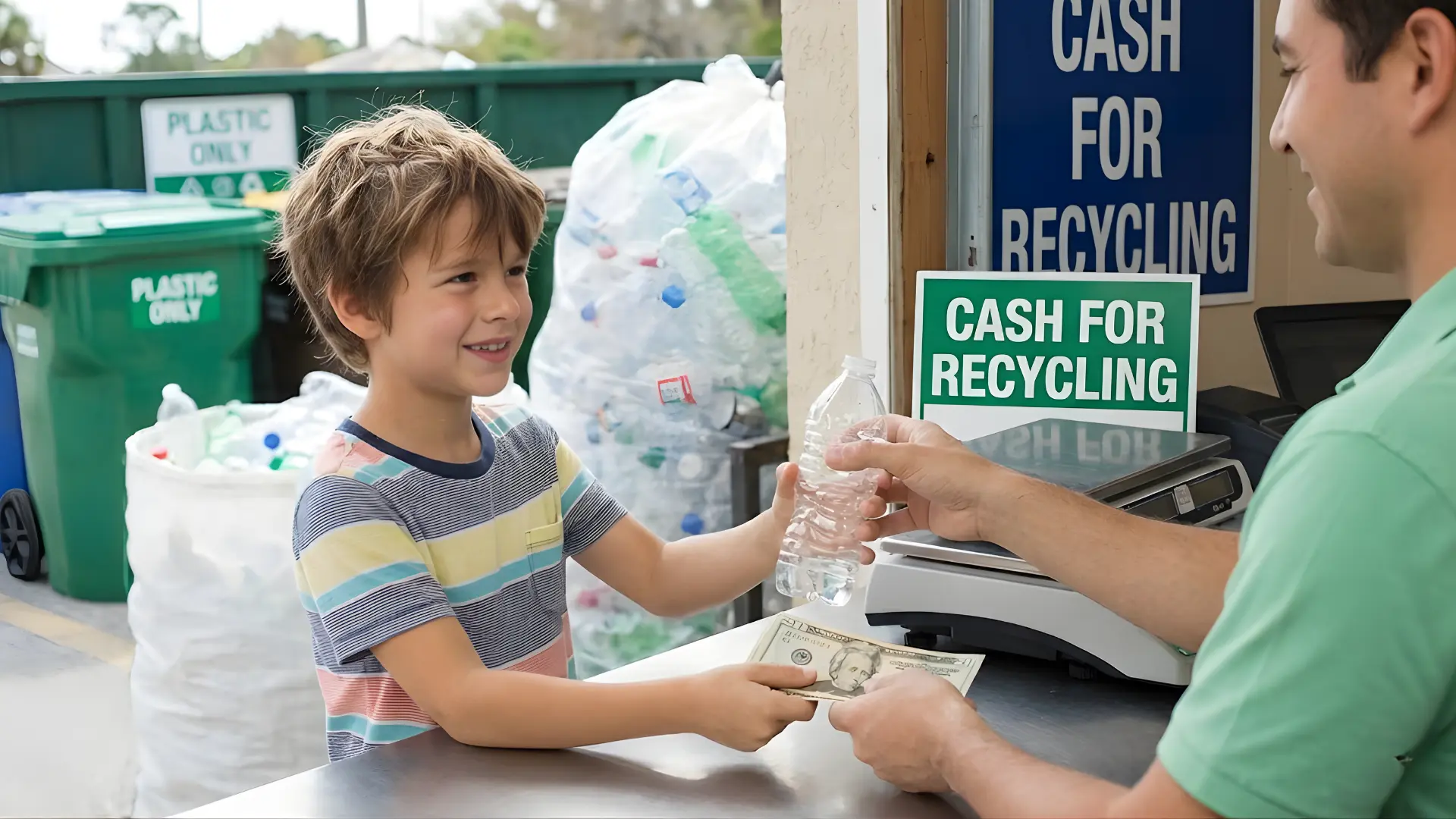
Want to learn how to recycle plastic bottles for cash? Here’s the good news: if you live in the right state, you absolutely can. And the best part? You’re probably already throwing away money every single week without realizing it.
Most Americans throw away beverage bottles without thinking about the deposit they paid. Whether it’s water, soda, or beer, that empty bottle in your trash could be worth money if you know where to bring it.
In this guide, we’ll walk you through everything you need to know about recycling plastic bottles for cash, including which states pay you the most, where to find redemption centers near you, and practical strategies to maximize your earnings.
Recycle Plastic Bottles for Cash
First, let’s answer the big question: How much money can you actually make?
The answer depends on your location.
If you live in one of the 10 U.S. states with bottle deposit laws, you can earn 5 to 10 cents per plastic bottle. While that might seem trivial, consider this: collecting one bottle can earn you the equivalent of sending a text message or buying a piece of gum. It may not seem like much at first, but it adds up quickly.
Here’s what the math looks like:
- 50 bottles per month = $2.50 to $5.00
- 200 bottles per month = $10 to $20
- 500 bottles per month = $25 to $50
For families, offices, or event venues that use many bottled drinks, these amounts can become significant. Imagine putting this extra cash towards eco-friendly goals like purchasing reusable water bottles for your family or funding a monthly public transport pass. This way, every bottle you recycle not only earns money but also contributes to a sustainable lifestyle.
However, if you don’t live in a bottle bill state, it’s much harder to earn money. In the other 40 states, recycling centers usually pay by weight, meaning only pennies per pound. Many places don’t pay cash and just accept recyclables for free. Despite this, there are still a few alternatives to consider. You could look into recycling aluminum cans, which often hold more value than plastic and might offer a slightly better return.
Additionally, some local programs might accept recyclable materials and offer incentives for their collection, even if not directly cash-based. It’s worth exploring these options in your area to see what might work best for you. That’s why it’s important to know your state’s specific rules before you start.
The 10 States Where You Can Earn the Most
Here are the states where you can get cash back for plastic bottle deposits:
High-Payout States (10 cents per bottle)
Michigan leads the pack with a 10-cent deposit on beverage containers. This state has consistently maintained one of the highest deposit rates in the nation, making it one of the best places to earn money from recycling plastic bottles. One local recycler from Michigan shared, ‘I managed to earn $50 last month just by consistently collecting and returning bottles. It isn’t a full-time income, but it certainly adds up and contributes to my monthly expenses.’
Oregon also pays 10 cents per container. Oregon was the first state to pass a bottle bill in 1971 and now has the highest recycling rate in the country at about 87%.
Connecticut raised its deposit from 5 cents to 10 cents in 2024, which led to a 21% jump in redemption rates. If you live in Connecticut, this means more earning potential.
Standard-Rate States (5 cents per bottle)
California pays 5 cents for bottles under 24 ounces and 10 cents for larger ones. With so many people in the state, there are plenty of bottles to collect.
Hawaii pays 5 cents per container up to 68 ounces. Beaches and parks often have bottles to collect, making it a good opportunity for recyclers.
Iowa provides 5 cents for any beverage container. As a smaller state with a more rural population, Iowa might have less competition for bottles.
Maine offers 15 cents for wine and liquor bottles and 5 cents for other drinks. If you can collect wine bottles, Maine can be especially profitable.
Massachusetts pays 5 cents per container, regardless of size.
New York pays 5 cents per bottle or can under one gallon. With so many people in New York City, there are plenty of bottles available.
Vermont also pays 15 cents for liquor containers and 5 cents for other bottles.
Your 5-Step Cash-Back PlanReady to start earning? Here’s exactly how it works:
Step 1: Identify Which Bottles Qualify
Not every plastic bottle gets you paid. In most states, only beverage containers qualify (think water, soda, beer, juice, and energy drinks).
Check the label. If it’s a drink container, it likely qualifies. Non-beverage bottles (like cleaning products or medicine) don’t count.
The plastic type matters too. Most redemption programs accept PET (plastic #1) and HDPE (plastic #2), which make up the vast majority of beverage bottles anyway.
Step 2: Collect and Store Your Bottles
Start saving. Whether it’s bottles from your household or collected from friends, family, or events, accumulate them in a designated space. Picture this: stack bottles in a 13-gallon bin that fits neatly under a laundry shelf. This way, you’re not just saving space, but also keeping your collection organized and easily accessible. For those with more space or who need to store larger quantities, consider using stackable crates, which can help save room and allow for easy transport. If you live in an area where outdoor storage is viable, using weather-resistant outdoor bins could be an effective solution to free up indoor space while keeping your collection safe.
Tip: Give bottles a quick rinse to remove any sugary residue. They don’t need to be spotless, but very dirty bottles might be rejected.
Store bottles in sturdy bags or bins. Keep them out of direct sunlight and in a dry place, like a garage or closet, to prevent mold.
Step 3: Find Your Local Redemption Center
Many people find this step confusing, but it’s actually easy.
Open Google Maps and search: “bottle redemption near me” or “deposit refund center near me.”
Your options typically include:
- Reverse vending machines at grocery stores and supermarkets (most common)
- Dedicated bottle redemption centers in your city or county
- Gas stations and convenience stores (many participate, though not all)
- Liquor stores in some areas
If you’re not sure a location accepts plastic bottles, call ahead. Some places only take cans or have limited hours.
Step 4: Prepare Your Bottles
Before you go, prepare your load:
- Remove caps and lids (most machines require this)
- Take off labels if your center requests it (some don’t care)
- Check that your bottles are clean and dry.
- Organize by type if the center prefers separation (but this is rare)
Pack your bottles in bags or bins that are easy to carry.
Step 5: Head to the Redemption Center
Take your bottles to the facility. For reverse vending machines:
- Feed bottles one at a time (or in small batches, depending on the machine)
- The machine scans the barcode and accepts or rejects each bottle.
- Once finished, it prints out a receipt showing the total refund amount.
- Take the receipt to customer service to claim cash (or sometimes instant payment from the machine)
At traditional redemption centers, you might hand your bottles to an attendant who counts and processes them.
The whole process usually takes 15 to 30 minutes, depending on how many bottles you have and how busy the location is.
Where to Find Redemption Centers
Reverse Vending Machines (RVMs)
These are the most common options and likely what you’ll see first. RVMs are machines that scan, accept, and count your bottles automatically.
Where to find them:
- Supermarket entrances or parking lots (Whole Foods, Kroger, Safeway, and others increasingly have them)
- Shopping mall entrances
- Retail stores in bottle bill states
- Some libraries and community centers
How they work:
- Insert the bottle into the opening.
- The machine scans the barcode.
- The screen displays confirmation or rejection.
- Credits accumulate on receipt.
- Cash or voucher printed at the end.
RVMs are convenient because they’re open whenever the store is open, often including evenings and weekends.
Grocery Stores and Supermarkets
Most large grocery chains in bottle bill states maintain bottle redemption programs. Some have machines; others have dedicated collection areas where staff process bottles.
Call ahead or visit in person to confirm:
- Whether they accept plastic bottles specifically (some only take cans)
- Their redemption hours (sometimes limited)
- Whether they offer cash or store credit only
Many stores give store credit or gift cards instead of cash, which works well if you shop there.
Dedicated Recycling Centers
These are standalone facilities that specialize in bottle redemption and recycling. They typically accept all types of containers: plastic, glass, and aluminum.
How to find them:
- Search your state’s environmental agency website.
- Contact your city or county waste management department.
- Google “bottle redemption center [your city].”
Advantages:
- They often pay cash right away.
- Accept bulk quantities
- May have better rates for larger loads
- Experienced staff who process quickly
Disadvantages:
- Might have limited hours
- They may be less conveniently located.
- May be more crowded
Gas Stations and Convenience Stores
Many gas stations and corner stores participate in bottle deposit programs, though not all. Call first to confirm.
These work well for:
- Quick drops of a few bottles
- Combining errand runs (grabbing a coffee while redeeming bottles)
- Areas without grocery store proximity
Less Common But Valid Options
Some specialized locations also accept bottle deposits:
- Liquor stores (especially for wine/beer bottles)
- Hardware stores in rural areas
- Community events and farmers’ markets
- School fundraiser drop-off points
How Much Money Can You Realistically Earn?
Let’s get practical about earnings expectations:
Casual Household Recycler
If you’re just recycling your family’s own bottles:
- A family of 4 drinking bottled beverages daily: approximately 40 bottles per week. At 5 cents each, you earn $2 per week, which is about $8 per month. This translates to roughly $0.50-$1.00 per hour of effort, considering washing and organizing bottles takes about 1-2 hours monthly. At 10 cents each: $4 per week equals approximately $16 per month.
This breaks down to around $1 to $2 per hour. Annual earnings: $96 to $192. This could pay for a few nice dinners or holiday gifts. It’s not a huge amount, but it’s money you would have thrown away.
Active Collector (Household + Friends)
If you’re actively gathering bottles beyond just your home:
- Your household: 40 bottles per week
- Friends and family donations: 60 bottles per week
- Total: 100 bottles per week
- At 5 cents: $5 per week equals approximately $20 per month, which equals $240 per year.
- At 10 cents: $10 per week equals approximately $40 per month, equals $480 per year.
At this level, you could cover gas, add to a vacation fund, or have extra for holiday shopping.
Serious Side Hustle (500+ bottles per month)
For someone making this their actual side business:
- 500 bottles per month at 5 cents equals $25 per month, which equals $300 per year
- 500 bottles per month at 10 cents equals $50 per month equals $600 per year
However, collecting 500 bottles takes real effort. Here’s what to expect.
Collecting, cleaning, sorting, transporting, and redeeming 500 bottles takes about 10 to 15 hours a month. That’s about $20 to $30 per hour, which is decent but not amazing.
Gas for driving to redemption centers can add up. If the centers are far, your profit goes down. Consider combining your bottle returns with regular errands to save on travel costs; for example, drop off bottles when you’re already heading to the grocery store or the bank. This not only maximizes your convenience but also keeps your profits from being eaten up by fuel expenses. Carpooling with a friend or family member who is also collecting bottles can also be an efficient way to manage transportation costs. Collaborating with others not only makes the trip more enjoyable but also helps everyone save on gas money.
To make this worthwhile, focus on your location and the number of bottles you collect.
If you live in a 10-cent state (Michigan, Oregon, Connecticut), earnings double immediately. If you can find reliable sources of bottles (restaurants, bars, events, and offices), you can reduce collection time dramatically.
Factors That Affect Your Earnings
Why does earning vary so much? Here are the biggest factors:
1. Your State’s Deposit Law
This makes a big difference. A 10-cent state is twice as profitable as a 5-cent state. If you live near a state border, you might collect in the higher-paying state, but check the rules first.
2. Bottle Type and Size
In California, larger bottles are worth more. If you can, focus on collecting 2-liter bottles and bigger containers.
3. Container Cleanliness
Dirty or sticky bottles may be rejected. Rinse them quickly to avoid problems at the redemption center.
4. Market Conditions
In non-deposit states, the value of plastic changes with the market. Aluminum prices are more stable, which is why recycling aluminum is often more profitable in these states.
5. Distance to Redemption Centers
Gas and travel time reduce your profit. The closer your redemption center, the more you’ll actually earn.
6. Bulk vs. Individual Returns
Some centers want you to bring bottles in bulk, while others accept small amounts. This can affect how you plan your returns.
The Complete Plastic Bottle Recycling Facts You Should Know
America’s Plastic Bottle Crisis
The numbers are staggering:
50 billion plastic bottles are purchased annually in the U.S.
Americans use an average of 156 plastic bottles per person per year.
Only 33% of plastic bottles get recycled (as of 2023)
5 million plastic bottles are thrown away every single hour in America
35+ billion bottles end up in landfills yearly
That’s about 11,000 bottles per person each year, ending up in landfills. Each bottle takes at least 450 years to break down. As you read these figures, consider your own impact: how many bottles do you purchase and recycle each year? If you recycle just 100 bottles, you can save approximately 3.5 pounds of plastic from ending up in landfills. This awareness can turn abstract statistics into a personal call to action, motivating you to contribute to change.
Why is this important?
The numbers are staggering:
- 50 billion plastic bottles are purchased annually in the U.S.
- Americans use an average of 156 plastic bottles per person per year.
- Only 33% of plastic bottles get recycled (as of 2023)
- 5 million plastic bottles are thrown away every single hour in America
- 35+ billion bottles end up in landfills yearly
That’s about 11,000 bottles per person each year, ending up in landfills. Each bottle takes at least 450 years to break down.
Why Deposit Laws Actually Work
States with bottle bills recycle 56% of bottles, while states without them recycle only 18%. Even a small deposit, like 5 or 10 cents, is enough to encourage people to recycle.
Oregon’s 87% recycling rate proves this beyond doubt.
The Business Case for Your Recycling
When you recycle plastic bottles for cash, here’s what happens:
- Collection: Your bottle is processed at a recycling facility
- Sorting: It’s sorted by plastic type (PET, HDPE, etc.)
- Shredding: Bottles are broken into small flakes
- Processing: Flakes are cleaned and melted into pellets
- Manufacturing: These pellets become new bottles, textiles, or plastic products
This cycle saves energy, cuts down on waste, and creates jobs. Your 5 or 10 cents helps support the whole system.
States WITHOUT Bottle Bills: What Are Your Options?
If you live in one of the 40 states without bottle deposit laws, it’s almost impossible to make much money from recycling plastic bottles.
But you do have a few options:
Option 1: Bulk Sale to Scrap Yards
Some recycling facilities buy bulk plastic. Payment is typically per pound, not per bottle. Expect:
- $0.08 to $0.30 per pound of PET plastic
- You’d need 100 or more bottles just to accumulate a pound.
- Market prices change depending on the value of plastic at the time.
Realistic earnings: $0.48 to $1.50 per 100 bottles (compared to $5-$10 in deposit states)
Option 2: Specialized Recycling Companies
TerraCycle and similar services previously paid cash for recycling. Most now offer “points” redeemable for charity donations rather than direct cash.
These programs are better for helping the environment than for making money.
Option 3: Switch to Aluminum Can Recycling
Aluminum cans hold their value much better than plastic. Current market rates:
- $0.64 per pound for aluminum cans (as of late 2025 and early 2026)
- A pound of aluminum equals roughly 20-24 cans.
- $0.03 per can average
Aluminum is a better option than plastic in non-deposit states, but the earnings are still small.
The Real Talk About Non-Deposit States
Unfortunately, many states have not made recycling incentives a priority. Lobbying from beverage companies and retailers has stopped bottle bill laws in 40 states.
If you care about earnings, you have two choices:
- Advocate for change: Join recycling organizations pushing for bottle bill legislation in your state.
- Or, accept that in your state, recycling plastic is mainly for the environment, not for making money.
Pro Tips to Maximize Your Plastic Bottle Cash
Ready to optimize your earnings? Here’s how top recyclers operate:
Collection Strategy #1: Event Cleanup
After concerts, festivals, marathons, and sports events, there’s a massive bottle presence. Partner with event organizers or simply clean up afterward.
If you collect bottles for two hours at a big event, you could gather 300 or more bottles. That’s $15 to $30 in one evening.
Collection Strategy #2: Workplace Partnership
Propose to your employer: “Can I collect bottles from the break room and office events?”
Most companies are glad to reduce their waste. You get more bottles to recycle, and they benefit, too.
Collection Strategy #3: Restaurant and Bar Partnerships
Contact local bars, restaurants, and entertainment venues:
“Hi, I collect used beverage bottles and cans for recycling. Would you be interested in me picking up your empties weekly?”
Many venues pay for waste removal, so collecting their bottles helps them and gives you more to recycle.
Expected volume: A mid-size restaurant might generate 500-1,000 bottles per month.
Collection Strategy #4: Community Events
Organize a bottle collection drive at school, church, or community organization. Frame it as fundraising or environmental service.
Organization Tip: The Stackable System
Use stackable milk crates to store bottles instead of loose bags.
- Easy to count
- Prevents crushing
- Space-efficient
- Simple transport
Timing Your Redemptions
Go to redemption centers during off-peak times, like mid-weekday mornings, to avoid lines and finish quickly.
Some people bring in large batches of bottles every month or quarter to save on transportation.
Technology Tip: Track Your Bottles
Use a simple spreadsheet or app to track:
- Date collected
- Bottle count
- Location source
- Amount earned
Tracking this information helps you improve your collection strategy and see how much you’re earning.
Common Mistakes to Avoid
Learn from others’ mishaps:
Mistake #1: Bringing the Wrong Bottle Types
Some centers only take beverage bottles. Bottles from detergent or lotion are usually rejected. Check the requirements before you go.
Mistake #2: Skipping the Rinse
Sticky, crusty bottles smell and risk rejection. A 30-second rinse per bottle saves problems.
Mistake #3: Forgetting Caps and Labels
Many machines need caps removed. Some centers want labels off, but many don’t. Call ahead to check your center’s rules.
Mistake #4: Underestimating Transportation Costs
Driving 20 miles or more to a center can cut into your profit. Try to use centers within 5 to 10 miles if you can.
Mistake #5: Not Checking Hours
It’s frustrating to arrive at a center and find it closed. Call or check their hours online before you go.
Mistake #6: Ignoring Your State’s Rules
Each state has different qualified containers and deposit amounts. Know your state’s specific rules.
Mistake #7: Not Expecting Quick Wealth
This is extra income, not a way to get rich quickly. Keeping realistic expectations helps you stay motivated.
The Future of Plastic Bottle Recycling
The recycling landscape is evolving rapidly:
Technological Advances
Some new recycling centers use AI-powered machines to sort plastic types more accurately. This could raise recycling rates to 50% or higher in the next few years.
Newer reverse vending machines are faster, more reliable, and better at spotting bottles that can’t be redeemed.
Some programs now use digital tracking for bottles, which helps prevent fraud and improves data collection.
Legislative Momentum
Several states are considering expanding or implementing bottle bill programs:
- New Jersey, New Hampshire, and Delaware have active legislative efforts.
- California recently considered increasing its deposit rates.
- Federal-level proposals for a nationwide deposit system are being discussed.
If your state adds a bottle bill in the future, you could earn much more from recycling.
Corporate Initiatives
Major beverage companies are exploring:
- Reusable bottle programs
- Direct redemption through mobile apps
- Higher deposit incentives to compete with alternatives
These changes could make recycling easier and possibly more profitable.
FAQs: Recycle Plastic Bottles for Cash
Q: Can I redeem bottles from other states in my state?
A: No, generally not. Deposit refunds are state-specific. Out-of-state bottles won’t have your state’s deposit markings. However, you can redeem your bottles in another state if you travel there, as long as they’re from that state.
Q: Do I need to remove labels from plastic bottles?
A: Not usually. Most modern redemption machines scan barcodes on labels. Check with your specific center (most don’t require label removal).
Q: What happens if a bottle is damaged or partially crushed?
A: Damaged bottles sometimes get rejected by machines. Call ahead if you’re uncertain. Staff at redemption centers can usually override machine rejections if needed.
Q: Can kids earn money recycling bottles?
A: Absolutely! This is an excellent way to teach kids about sustainability and earning. No age restrictions typically apply.
Q: How quickly do I get paid?
A: Most places pay immediately (either cash from the machine or a receipt you exchange for cash with staff). Same-day payment is standard.
Q: Are glass and aluminum bottles different from plastic?
A: Yes, and they’re often more valuable. Aluminum cans especially hold better resale value. Many deposit programs accept all three types (plastic, glass, and aluminum).
Q: What actually happens to bottles after I redeem them?
A: They’re transported to processing facilities where they’re sorted, cleaned, shredded into flakes, and melted into pellets. These pellets become new bottles, clothing fibers, or other plastic products. Roughly 30-50% become new bottles; the rest become other products.
Q: Should I store bottles indoors or outdoors?
A: Indoors in a cool, dry location (garage, basement). Outdoor storage attracts pests and can degrade bottles through UV exposure.
Q: Is it legal to collect bottles from public trash bins?
A: Varies by location. Some cities allow it; others consider it trespassing. Always ask permission. Never collect from private property without consent.
Q: What if a redemption center won’t pay cash?
A: You can ask for store credit or seek another facility. Many centers have options.
Start Earning From Your Plastic Bottles Today
Here’s the bottom line: If you live in a bottle bill state, recycling plastic bottles for cash is a legitimate, easy way to earn extra money. Is it going to replace your job? No.
Will it fund a vacation? Unlikely (unless you’re collecting seriously). However, considering the trash you’re already generating, converting it into $20-50 per month is completely reasonable.
The process is simple: Save your beverage bottles. Find your nearest redemption center. Bring them in. Walk away with cash. You’re not just earning money — you’re also helping keep billions of bottles out of landfills. That matters.
Pledge to save every bottle for one week and see how much it adds up, both in your wallet and for the planet.
If you live in a non-deposit state, recycling plastic bottles won’t earn you much. Still, it’s good for the environment. You can support bottle bill laws in your state, and recycling aluminum cans is a slightly better option. To stay motivated and involved, consider joining local recycling drives or community cleanup events. These activities not only help the environment but also create opportunities to connect with others who share your values. Engaging in community initiatives can make a significant impact while fostering a sense of collective action.
Now you know how the system works and how to maximize the benefits of your recycling efforts.
Ready to begin? Search for ‘bottle redemption near me’ and bring in your first batch of bottles this week.
Your wallet and the planet will both benefit.
Imagine the collective impact if everyone in your community followed suit, leading to less waste and a noticeable reduction in landfill size. Together, these small, individual actions can drive significant societal change, contributing to a cleaner, more sustainable environment for future generations.

Sarah Whitman is the founder and lead editor of Keen Pocket. She holds a BS in Accounting and Finance and writes plain-English guides on budgeting, saving, debt, and beginner investing.