Cash Envelope System for Beginners (With Free Printable Envelopes)

Last fact-checked: · Editorial standards
If your card balance keeps creeping up and your paycheck disappears before you can track where it went, the cash envelope system can help you take back control. It’s hands-on, simple, and it works because you can literally see your spending limits.
Over the past few years, more than half of Americans have reported living paycheck to paycheck, and U.S. credit card balances have crossed the one-trillion-dollar mark for the first time. In response, millions of people have rediscovered “cash stuffing” and envelope budgeting on TikTok and YouTube as a back-to-basics way to spend more intentionally.
This guide walks you through the cash envelope system step by step, with realistic examples, free printable templates, and digital options if carrying cash isn’t for you.
Why the Cash Envelope System Matters in 2026
Between 2023 and 2025, surveys consistently found that roughly six to seven out of every ten Americans were living paycheck to paycheck. They most reported feeling stressed about money regularly. At the same time, U.S. credit card balances climbed from about $1.03 trillion in 2023 to roughly $1.28 trillion by late 2025, as more households leaned on cards just to cover groceries and gas.
That financial pressure is a big reason cash stuffing exploded on social media. When you use the cash envelope system, you stop relying on swipes and taps and start giving every spending category a physical limit you can see and touch.
What Is the Cash Envelope System?
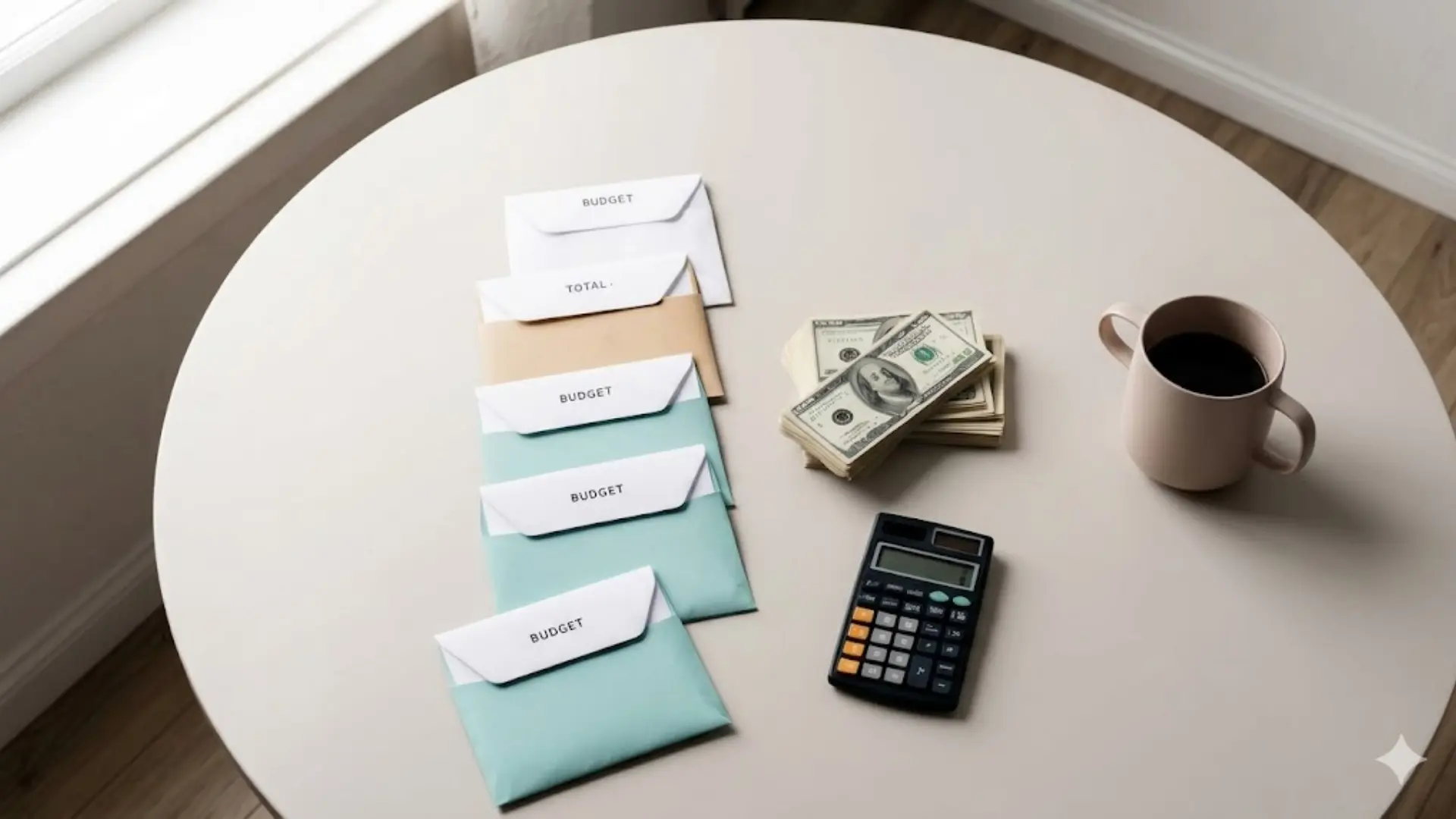
The cash envelope system (also called envelope budgeting or cash stuffing) is a method where you split your monthly spending money across labeled envelopes — one for groceries, one for gas, one for fun, and so on. You decide each amount in advance, withdraw cash on payday, and “stuff” the envelopes at the start of your budget period.
For the rest of the month, you spend only from the relevant envelope. When the cash is gone, you stop spending in that category until next payday — unless you intentionally move money from another envelope and accept the trade-off.
Fixed bills like rent, car loans, and insurance can stay on autopay through your bank. The cash envelope system is mainly for the flexible part of your budget — the part that tends to spiral out of control.
Is the Cash Envelope System Right for You?
This method is especially helpful if any of these sound like you:
- You often overspend with debit or credit cards.
- Your card statement surprises you every month.
- Your money “disappears” before the next payday.
- You want a physical system instead of yet another app.
It may not be necessary if you already track every dollar with a digital system you actually stick to. And it has trade-offs — carrying cash is less convenient, and you’ll need to think about safety when storing envelopes at home.
Still, for many beginners, the cash envelope system is the first method that finally clicks, because it makes spending limits concrete and immediate.
How to Start a Cash Envelope System (Step by Step)
You can start with a single paycheck and refine the system over time. Here’s the roadmap.
Step 1: Look at Your Current Spending
Before you decide on envelope amounts, you need to know where your money is currently going. Pull one to three months of bank and credit card statements and group your spending into categories like housing, groceries, gas, eating out, subscriptions, debt payments, and savings.
Don’t aim for perfect categories on the first pass. Just get a rough picture of how much typically goes toward needs, wants, and debt or savings.
Step 2: Build a Simple Starter Budget
A common starting point is the 50/30/20 rule: about 50% of take-home income for needs, 30% for wants, and 20% for savings and debt payoff. Use those percentages as a loose guide when setting envelope amounts.
Keep it simple at first. Pick five to seven core categories that matter most to your day-to-day spending, like groceries, gas, eating out, fun, personal care, and a small miscellaneous catch-all. You can always add more later.
Step 3: Choose Your Envelope Categories
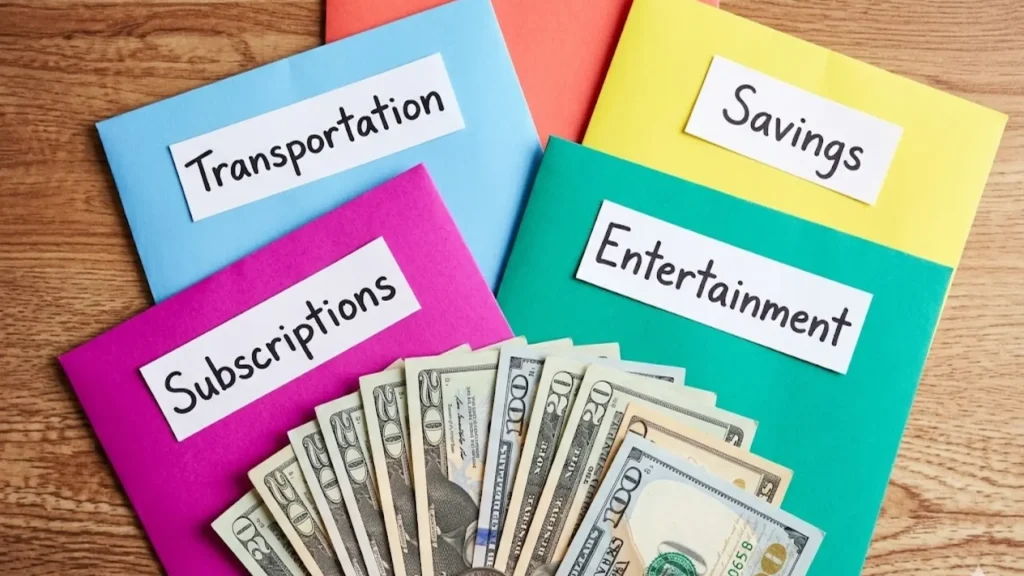
Focus on the areas where you most often overspend. Common starter envelopes include:
- Groceries
- Gas and transportation
- Eating out and coffee
- Fun and entertainment
- Personal or beauty
- Kids or school
- Small sinking funds (gifts, car maintenance, holidays)
For example, imagine a household with $4,000 in monthly take-home pay. After rent and other fixed bills are covered automatically, they put $800 into envelope categories like groceries, gas, and fun, plus $200 into a savings envelope. Your numbers will look different — the point is to pick realistic amounts and test them for a month.
Step 4: Set Your Stuffing Schedule
Decide how often you’ll refill envelopes. Many people get paid every two weeks and stuff envelopes each payday; others prefer a single monthly cycle.
If your monthly grocery budget is $400 and you’re paid twice a month, you’d put $200 into the grocery envelope on each payday. Do the same for every other envelope category.
Step 5: Withdraw Cash and Stuff Your Envelopes
On payday, total up the cash you need for all envelopes, head to the bank or ATM, and withdraw that amount. If you can, ask for denominations that make stuffing easier — smaller bills tend to work better for categories like fun or personal spending.
Label each envelope clearly with the category and the amount it should hold. Some people color-code or use a budget binder with zipper pouches; others use plain paper envelopes. Pick whatever you’ll actually stick with.
Step 6: Spend Only What’s in the Envelope
From now until your next stuffing day, spend only from the relevant envelope. Take the grocery envelope to the supermarket, the gas envelope to the pump. When an envelope is empty, you stop spending in that category — or intentionally move money from another envelope after thinking it through.
This is the rule that makes the system work. It creates a built-in spending limit and forces you to weigh trade-offs in real time.
Step 7: Review and Adjust Every Month
At month-end, look at what worked and what didn’t. If you keep running out of gas money halfway through, increase that envelope and shrink another. If you consistently have leftover fun money, redirect some of it to savings or debt.
The goal isn’t perfection — it’s progress. Your envelope amounts should evolve as you learn what your real spending looks like.
Sample Cash Envelope Budgets
Real numbers make this much easier to visualize.
Example 1: Tight Budget (~$2,800 take-home)
After rent, minimum debt payments, and utilities are paid automatically, this person sets aside $600 for envelopes:
| Category | Monthly Amount |
|---|---|
| Groceries | $260 |
| Gas and transportation | $160 |
| Eating out / coffee | $80 |
| Fun / entertainment | $50 |
| Household and toiletries | $50 |
If paid twice a month, they stuff half of each amount per paycheck. Simple, but it covers the main “leak” categories.
Example 2: Moderate Budget (~$4,500 take-home)
After fixed bills and savings contributions, this household sets aside $1,000 for envelopes:
| Category | Monthly Amount |
|---|---|
| Groceries | $350 |
| Gas and transportation | $200 |
| Eating out | $150 |
| Fun | $100 |
| Kids / school | $100 |
| Sinking fund (gifts, car maintenance, holidays) | $100 |
This example shows how a small sinking fund can fold into the system, helping you prepare for irregular expenses instead of reaching for a credit card later.
Digital Cash Envelope Alternatives
If you don’t want to carry cash or worry about losing envelopes, you can apply the same principles digitally. The modern evolution of cash stuffing uses budgeting apps, bank sub-accounts, or labeled savings “pots.”
A few common approaches:
- Bank sub-accounts or pots. Open separate savings accounts (or use named pots in your banking app) for Groceries, Gas, Fun, and so on. Move money into each pot on payday and treat the balance like an envelope.
- Zero-based budgeting apps. Apps that let you assign every dollar to a category and track spending in real time work the same way envelopes do — they just live on your phone.
- Hybrid systems. Some people keep cash envelopes for the categories they overspend most (often groceries and eating out) and digital envelopes for everything else.
The rule stays the same either way: don’t spend more than what you’ve assigned to each envelope.
How to Combine Cash Envelopes with Credit Cards Safely
Many beginners still want credit card rewards or need cards for online purchases. Two safe ways to combine envelopes with cards:
- Track card spending against your envelopes. Treat envelopes as planning tools, and physically set aside the cash to pay your card in full at the end of the cycle.
- Use separate accounts as digital envelopes. Keep labeled savings accounts for each major category and move money into checking only after a card purchase posts.
Either approach only works if you pay the card in full each month using money that was already reserved in your envelopes. That’s how you avoid contributing to the record-high credit card balances so many households are now carrying.
Tips to Make the Cash Envelope System Stick
A few habits make a real difference for beginners:
- Start simple. Begin with a small number of envelopes and add more only after a month or two of experience.
- Use sinking funds. Create small envelopes or digital pots for irregular expenses like car repairs, holidays, and birthdays.
- Make stuffing a routine. Pick a set time each payday — not “whenever you remember” — to withdraw cash or move money into digital envelopes.
- Store cash safely. Keep only what you actually need at home. For larger amounts, use digital envelopes instead.
- Be patient with yourself. It takes a couple of months for your numbers to settle into something realistic.
Common Cash Envelope Mistakes (and How to Fix Them)
Even with a good plan, beginners stumble. The most common mistakes:
- Creating too many envelopes at once. Fix: start with five to seven and grow from there.
- Never adjusting the amounts. Fix: review and rebalance monthly.
- Treating envelopes as punishment. Fix: remember they’re a tool for clarity, not a diet.
- Ignoring online spending. Fix: pair cash envelopes with a digital envelope for online orders.
Frequently Asked Questions
How many envelopes should beginners start with? Most people do well with four to seven envelopes at first: groceries, gas, eating out, fun, personal, and maybe one sinking fund.
Can I use cash envelopes if I get paid weekly or bi-weekly? Yes. Divide each category’s monthly amount by the number of paychecks you receive that month, and stuff that fraction every payday.
What if I mostly shop online? Pair the cash envelope system with a digital envelope system. Create categories in a budgeting app or bank pots and treat those balances like envelopes for online orders.
How do I handle emergencies while using envelopes? Keep a small “buffer” envelope for minor surprises, and build a real emergency fund in savings for bigger ones. That way, you don’t have to raid every envelope when something unexpected happens.
How long should I stick with the cash envelope system? Many people use envelopes intensively for three to six months to reset their habits, then either continue or shift to a hybrid digital model once they’re confident.
Is cash stuffing the same as the cash envelope system? Essentially, yes — “cash stuffing” is the social media term for envelope budgeting. The mechanics are identical.
Next Steps After the Cash Envelope System
The cash envelope system is training wheels for your money. Once you’re consistently staying within your envelopes and feeling less anxious about spending, you can:
- Move more categories into digital envelopes or a trusted budgeting app.
- Build a stronger emergency fund and dedicated sinking funds for bigger goals.
- Explore more advanced strategies like investing, high-yield savings accounts, and additional income streams.
You don’t have to live with labeled envelopes forever. The goal is to use the system long enough to rebuild trust in yourself, stop relying on debt, and give every dollar a clear job.

Sarah Whitman is the founder and lead editor of Keen Pocket. She holds a BS in Accounting and Finance and writes plain-English guides on budgeting, saving, debt, and beginner investing.