
How to Save Money on a Low Income: A Realistic Guide

Last fact-checked: · Editorial standards
Let’s be honest. When someone tells you to “just skip the daily latte” and you’re already brewing instant coffee at home, that advice stings a little. Most money-saving articles seem written for people who actually have money to save in the first place.
If you’re trying to figure out how to save money on a low income, you don’t need recycled tips from financial gurus who haven’t checked a grocery price tag in a decade. You need real strategies that work when your paycheck barely covers rent, groceries, and gas.
The good news? It’s absolutely possible to build savings, even on a tight budget. People do it every day across the United States, often quietly and without fancy apps or six-figure salaries. In this guide, you’ll learn practical money-saving tips for low-income families, how to budget when you’re earning minimum wage, and the small habits that genuinely add up over time.
No judgment, no guilt trips. Just stuff that actually works.
How to Save Money on a Low Income
Start With a Brutally Honest Look at Your Money
Before you can save anything, you have to know where your money is actually going. Not where you think it’s going — where it’s really going.
Pull out your last two months of bank statements. Yes, two months. One month can be a fluke (that car repair, that birthday gift), but two months reveal patterns you can’t argue with.
Track Every Single Dollar
Grab a notebook, a free app like Mint or EveryDollar, or just a basic spreadsheet. Write down every expense, no matter how small. The $3 vending machine snack counts. The $1.99 app subscription you forgot about counts. The cash you handed your kid for school lunch counts.
Most people are genuinely surprised by where their money disappears. Subscriptions you stopped using months ago, fast food runs that felt like “just this once,” ATM fees, and late charges. These small leaks can drain $100 to $300 a month from someone living paycheck to paycheck.
Categorize What You Find
Once you’ve got a list, group expenses into three buckets:
- Needs — rent, utilities, groceries, transportation to work, basic medications
- Wants — streaming services, dining out, new clothes that aren’t necessary
- Wasted — fees, forgotten subscriptions, impulse buys you don’t even remember
The “wasted” category is your fastest win. Cancel, dispute, or eliminate everything in there before touching anything else.
Master the Art of Budgeting on Minimum Wage
Budgeting on minimum wage isn’t about following a rigid formula designed for someone making $80,000 a year. The classic 50/30/20 rule (50% needs, 30% wants, 20% savings) often doesn’t work when needs alone eat up 80% of your paycheck.
Instead, try a more realistic approach.
The “Bare Bones” Budget Method
Start by listing only your absolute essentials: rent, utilities, food, transportation, insurance, and minimum debt payments. Total it up. Whatever’s left — even if it’s only $40 — is your working money for everything else.
From that leftover amount, set aside something for savings first, even if it’s just $5 or $10 per paycheck. This is called paying yourself first, and it’s the single most underrated habit in personal finance. Tiny amounts feel pointless until you realize that $10 a week becomes $520 a year. That’s a real emergency fund starter.
Use the Cash Envelope System for Trouble Spots
If you constantly overspend in certain categories — groceries, eating out, entertainment — try the envelope method. Withdraw cash for those categories at the start of the week and physically put it in labeled envelopes. When the envelope’s empty, you’re done spending in that category until next week.
It sounds old-school, but research consistently shows people spend 12% to 18% less when using cash versus cards. There’s something about handing over physical money that makes you pause.
Cut Major Expenses, Not Just Coffee
Skipping small treats might save $20 a month. Renegotiating a single bill can save $50 to $100 a month. Guess which one moves the needle?
Slash Your Housing Costs
Housing is usually the biggest expense for low-income households. If yours eats more than 35% of your take-home pay, it’s worth exploring options:
- Get a roommate if your living situation allows it
- Look into income-based housing through HUD or local programs
- Negotiate your rent at renewal time — many landlords would rather give a small discount than search for a new tenant
- Consider a smaller place when your lease ends
Lower Your Utility Bills
Call your electric, internet, and phone companies and ask three magic words: “What discounts qualify?” Many providers have low-income assistance programs that they don’t advertise. The federal Lifeline program, for example, offers discounted phone and internet service to qualifying households.
Other quick wins: switch to LED bulbs, unplug electronics you’re not using, wash clothes in cold water, and seal drafty windows with cheap weatherstripping. These changes routinely cut electric bills by 10% to 20%.
Rethink Transportation
If you’re spending hundreds on a car payment, consider whether a reliable used car — paid off — could replace it. Insurance shopping every six months can also save $300 to $600 a year. Most people stay with the same insurer out of habit, even when better rates exist a phone call away.
Smart Grocery Strategies That Actually Save Money
Food is often the most flexible line in a budget, which makes it both a danger zone and an opportunity.
Plan Before You Shop
Going to the grocery store without a plan is like going to a casino with your savings. You’ll spend more than you meant to, every single time. For more store tactics, see our guide to ways to save money on groceries without coupons.
Before shopping, take 10 minutes to plan meals based on what’s already in your pantry and what’s on sale that week. Most grocery store websites and apps now show weekly deals so you can build meals around the cheapest proteins and produce.
Cook in Batches
Buying ingredients in bulk and cooking large batches once or twice a week dramatically lowers your per-meal cost. A pot of beans and rice with vegetables can feed a family for under $10 and last several days. Roasted chicken, soups, and chili all freeze well and beat the cost of fast food by a wide margin. For a full step-by-step system, see our guide to cheap meal planning on a tight budget for beginners.
Take Advantage of Assistance Programs
If you qualify, programs like SNAP, WIC, and local food banks aren’t something to feel ashamed about. They exist exactly for moments when budgets are tight. Many community fridges and church pantries also welcome anyone who needs help, no questions asked.
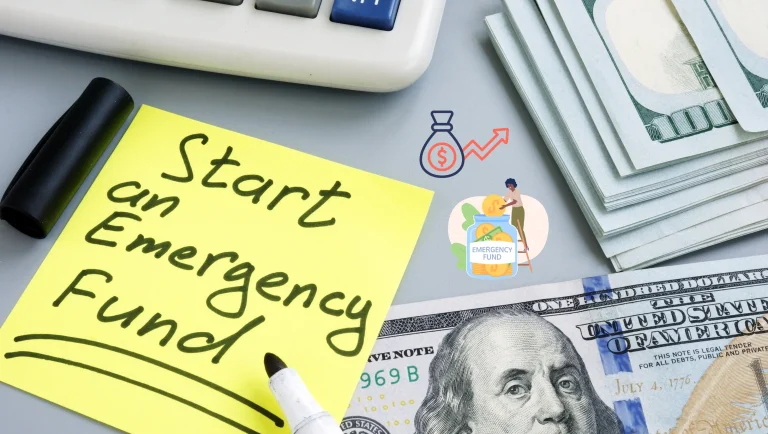
Build an Emergency Fund (Even a Tiny One)
Here’s a hard truth: most financial setbacks for low-income families come from emergencies — car repairs, medical bills, broken appliances — that wouldn’t be catastrophic with a small cushion.
You don’t need $1,000 saved overnight. You need something. Even $200 to $400 prevents many small emergencies from spiraling into payday loans or credit card debt that takes months to pay off.
Where to Keep It
Open a separate high-yield savings account at an online bank like Ally, Discover, or Capital One 360. Keeping emergency money out of your everyday checking account makes it harder to spend accidentally, and online savings accounts currently pay around 4% interest, compared with near-zero at most traditional banks.
Automate Even Small Amounts
Set up an automatic transfer of $5, $10, or $25 every payday. You won’t miss what you don’t see, and consistency beats intensity. Someone saving $20 a week will have over $1,000 in a year without ever feeling deprived.
Increase Your Income Without Burning Out
Cutting expenses has a floor. Income doesn’t. While saving on a tight budget is essential, sometimes the real solution is finding ways to bring in a little more.
Side Income Ideas That Don’t Require Investment
- Sell items you don’t use on Facebook Marketplace, OfferUp, or Poshmark
- Pet sit or babysit through apps like Rover, or for neighbors directly
- Sign up for grocery delivery gigs through Instacart or Shipt during your free hours
- Take online surveys on legitimate sites like Prolific or Pinecone Research (modest income, but real)
- Tutor or teach skills you already have, even informally
Ask for a Raise or Look for Better Pay
If you’ve been at a minimum wage job for over a year and haven’t asked for a raise, do it. The worst, they say, is no. Even better, many workers are finding that switching jobs results in a 10% to 20% pay increase — far more than annual raises typically offer.
Frequently Asked Questions
How much should I save each month on a low income?
Aim to save something, even if it’s just $10 to $25 per paycheck. The standard advice of saving 20% of income often isn’t realistic for minimum wage. Instead, focus on consistency. A small amount saved every payday builds both a financial cushion and the habit, which is what really matters long term.
How to save money on a low income – The fastest way
The fastest wins come from canceling unused subscriptions, calling providers to negotiate bills, and switching to cash for problem spending categories. These three steps alone can free up $100 to $300 a month for most households without changing your lifestyle dramatically.
Can I really build savings while earning minimum wage?
Yes, though it takes time and patience. Many people successfully save on minimum wage by minimizing housing and transportation costs, taking advantage of assistance programs, cooking at home, and consistently saving small amounts. It won’t make you wealthy quickly, but it builds real financial stability over months and years.
Should I pay off debt or save first?
Build a small emergency fund first ($300 to $500), then aggressively tackle high-interest debt like credit cards or payday loans. Without any savings, the next emergency just creates more debt. Once high-interest debt is gone, return to building a fuller emergency fund of three to six months of expenses.
Are there government programs that can help me save money?
Yes. Programs like SNAP (food assistance), LIHEAP (energy bill help), Medicaid, the Lifeline phone/internet discount, and Section 8 housing can significantly reduce monthly expenses for qualifying households. Check Benefits.gov to see what programs you might qualify for based on your income and location.
Final Thoughts: Small Steps, Real Progress
Learning how to save money on a low income isn’t about heroic sacrifice or gimmicky hacks. It’s about a hundred small decisions that quietly add up. Track your spending. Cut the bills you can. Cook more meals at home. Save a little every payday, even when it feels pointless.
You’re not going to fix everything in a week, and that’s okay. The people who eventually built financial stability didn’t do it through one big move. They did it through years of small, consistent choices, often while their income was still modest.
Start with one thing this week. Just one. Maybe it’s canceling that subscription you forgot about, or transferring $10 to a savings account, or planning your meals for the week ahead. Whatever feels manageable.
You can do this. And you don’t have to do it perfectly to make real progress.
Ready to take the next step? Pick one tip from this article and put it into action today. Small wins build momentum, and momentum builds the financial future you actually want.

Sarah Whitman is the founder and lead editor of Keen Pocket. She holds a BS in Accounting and Finance and writes plain-English guides on budgeting, saving, debt, and beginner investing.