Upside Review: How Upside Cash Back Works (2026)

Last fact-checked: · Editorial standards
What is Upside?
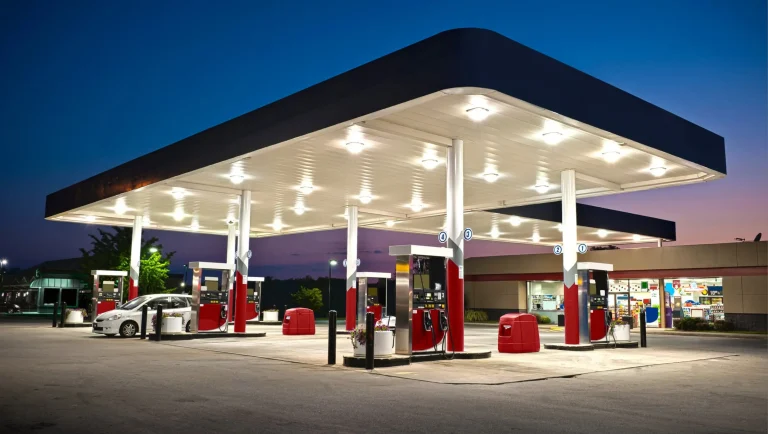
Upside is the gas app in the cash-back cluster — and the only one of the four that pays real money into your bank account from as little as $1.01. That low minimum is the headline. The catch is a habit you have to build first: you must claim the offer in the app before you pay, every single time. Forget the claim, and you earn nothing, no matter how much you spend.
It is also the app where the biggest advertised discount can be the worst deal. A station offering 15 cents a gallon off can still cost you more than the cheaper station down the road. If you check the price before you claim, Upside is free money on driving you were doing anyway. If you don’t, it is a discount on an inflated price.
This review covers how it works, what gas, groceries and restaurants actually pay, how you get your money out, and who should skip it.
Upside — formerly GetUpside, founded in January 2016 and renamed in April 2022 — is a free cash-back app for iOS and Android, run by Upside Services, Inc. of Washington, DC. It works in the United States only, and you need a linked credit or debit card to use it.
The idea is simple: retailers pay Upside to send them customers, and Upside shares some of that payment with you as cash back. You do not buy anything from Upside, and the app itself is free.
Unlike Fetch, which pays points for any receipt, and unlike Ibotta, which pays for specific grocery offers, Upside pays on the whole purchase at a participating location. Gas offers are shown as cents back per gallon; grocery and restaurant offers as a percentage of what you spend.
How Upside works, step by step
- Open the app before you go. Find a gas station, grocery store or restaurant near you with an offer. Offers are personalised — the same station can show you 10 cents a gallon and the person next to you 18 cents — and they change by station and by day.
- Tap Claim — before you pay. This is the step that matters. A gas, restaurant or convenience-store claim is good for 4 hours; a grocery claim is good for 24 hours. Claim it on the way there, not after you have already paid.
- Pay at that exact location with a card saved in your Upside Wallet. Upside matches the merchant’s transaction data to your card, so at most larger stations there is nothing else to do. If you pay with Apple Pay, Google Pay or Samsung Pay, upload the receipt in the app — without the upload you earn nothing. Cash and EBT purchases never earn.
- Wait for the purchase to confirm. Most purchases confirm in 2 to 4 days; some take up to 10. Your balance is shown in US dollars, not points.
- Cash out to your bank or a gift card once you have enough — see the payout section below. Bank transfer starts at $1.01.
There is also Pay with Upside at some merchants: generate an offer code in the app, the store scans it, and the cash back lands at once. One code per location, five a day, up to $400 a day.
What does Upside pay?
There is no standard rate, because every offer is set per location. But the ranges are consistent across reviewers who tested the app in 2026:
- Gas: Upside’s own marketing average is 11 cents a gallon. Independent reviewers’ real fill-ups ranged from about 6 to 14 cents a gallon, averaging about 11 cents. Some areas see genuinely strong offers in the 50 to 60 cent range; others see almost nothing. It depends entirely on the stations near you.
- Groceries and dining: Upside’s own marketing average is 8%. Reviewers saw about 6% to 21%, with restaurant offers commonly 10% to 40%, often capped around $10 per transaction. Grocery coverage is thinner than gas — regional and independent chains participate, but major national grocery chains are largely absent.
A realistic example: a driver who fills up 15 gallons a week at 20 cents a gallon earns $3.00 a week, or $12.00 after four weeks — and at $12.00 the bank cash-out is free, because the $1 fee applies only under $10. At Upside’s average of 11 cents a gallon, the same driver earns about $1.65 a week, roughly $85 a year on gas alone. Upside says frequent users average $255 in their first year across all three categories. Light users report far less — about $30 to $50 over a year for gas-only use.
Daily limits: 2 offers per gas station, up to 50 gallons per gas offer, 1 per restaurant, 3 per grocery store, 5 offers a day in total.
The gas-price trap: the biggest discount is not always the cheapest fill-up
This is the detail that decides whether Upside saves you money or costs you money. The stations offering the biggest Upside discounts are not always the cheapest stations to begin with — a station advertising 10 to 15 cents a gallon off can have a base price already 25 to 50 cents higher than a nearby discount station like Costco or Sam’s Club.
Do the maths before you claim. If your usual station sells gas at $3.00 a gallon and the Upside station sells it at $3.40 with 15 cents back, you are still paying $3.25 — 25 cents more than your usual station, for the privilege of a discount.
The habit that works: check the offers, then compare Upside’s discounted price against the cash price at your usual station before you commit. When the Upside station is already competitive, the cash back is genuinely free. When it is not, drive past it.
How you get paid: bank transfer from $1.01 — and no PayPal
Upside pays in real money, not points. Your balance is in US dollars, and there are two ways out:
Payout methods: Bank transfer — minimum $1.01, $1 fee under $10, free at $10 or more, 5 to 7 business days after you confirm by emailed link (the link expires in 24 hours). Gift card — most $10, a few $15 (for example, Uber Eats), no fee, up to 48 hours.
The $1.01 bank minimum is the lowest cash-out in this whole series — Rakuten needs $5.01 and pays quarterly, Ibotta needs $20, Fetch needs 10,000 points (about $10) for a first gift card. But the $1 fee under $10 means cashing out $5.00 leaves you $4.00. The smart move is to wait until you have $10, when the transfer is free.
One warning: there is no PayPal. Upside dropped PayPal support for most accounts in late 2025, and removed it from all remaining accounts on 14 August 2026. Cash-out is now bank transfer or gift card only. Upside’s own homepage still says “bank account, PayPal, or a gift card” — that line is out of date, and older reviews describing PayPal as an ongoing option are out of date too. If PayPal is the way you want to be paid, use Ibotta instead.
Two more things: most purchases sit as pending for 2 to 4 days, up to 10, before you can cash them out. And Upside’s terms say cash back expires after six months with no cash back earned or redeemed — while its help centre says it never expires while the account is in good standing. The terms are the binding document, so treat six quiet months as the expiry and cash out rather than letting a balance sit.
Is there a welcome bonus?
Usually, yes — but the amount changes, and different sources report different figures, so check the offer in the app when you sign up. Reports in late 2026 range from a $5 flat bonus with a promo code, to $10 to each side after a first purchase of $10 or more with a friend’s code, to an extra 15 cents a gallon on your first fill-up, to up to 25 cents a gallon on the first fill-up in Upside’s app-store listings. Upside’s own offer terms mention 20 cents a gallon on a first gas fill-up. This post does not carry a referral code. Whatever the bonus is, the amount shown in your app controls — and most versions of it need that first qualifying purchase, usually $10 or more, before anything pays out.
Stacking: how to earn more from the same fill-up
Upside stacks with the same two things Rakuten, Ibotta and Fetch do: a cash-back credit card (1.5–2% back on top of Upside’s cash back), and the other apps in this series — claim the Upside offer for the gas, and snap the receipt in Fetch for points.
What does not stack: a second receipt-level gas app. Purchases already credited by GasBuddy or Checkout 51 earn nothing from Upside. A station loyalty programme stacks, but the per-gallon cash back may drop to as little as 1 cent when loyalty is used. What never earns, whatever you stack: tobacco, lottery, money orders, gift cards, prescriptions, propane, sales tax, tips and third-party delivery orders. Alcohol is excluded at convenience stores and, in some states, at grocery stores.
Who Upside is NOT for
- People who pay cash or with EBT. Those purchases never earn. Fetch gives base points on eligible receipts from any store, whatever you pay with.
- People who will not open the app before every purchase. The claim-before-you-pay rule is unforgiving — fill up on autopilot and you earn nothing most of the time.
- People whose spending is mostly online. Upside covers in-person purchases at participating locations only. Rakuten is the online-shopping app in this series.
- People who want PayPal. It is gone — removed from all accounts on 14 August 2026. Ibotta still pays by PayPal, with a $20 minimum.
- People with no participating locations nearby. Offers depend entirely on what is near you. Check the map in the app before you decide.
Upside vs the other cash-back apps
Upside is the gas app: claim before you pay, real cash to your bank from $1.01, no PayPal. Rakuten is the online-shopping app: $5.01 minimum, paid quarterly, real cash by PayPal or check. Ibotta is the grocery app: activate offers first, $20 minimum, real cash by PayPal or bank. Fetch is the receipt app: any receipt, no planning, gift cards only, first reward $10. Most people in the pillar guide’s setup use all four for the spending each one covers, then send the cash payouts to a high-yield savings account — and spend the Fetch gift cards at the stores they already shop at.
Bottom line
Upside is legit, free, and genuinely pays real money into your bank — from $1.01, free at $10 — the easiest cash-out in the cluster. Its value lives or dies on two habits: claiming the offer before you pay, and comparing the discounted price against your usual station before you drive there. If you fill up regularly at participating stations near you, pay by card, and can remember to open the app first, it is the most practical app in the series for a driver. If you pay cash, forget to claim, or have no participating stations nearby, skip it and use Ibotta or Fetch instead.
Next in this series: Capital One Shopping vs Rakuten — then the grocery, gas, cashback-vs-points, stacking and payout guides, each linking back to Cashback Apps That Pay Real Money, the Rakuten review, the Ibotta review and the Fetch review.
Rates, bonus amounts and payout rules verified 17 Nov 2026 from Upside’s own help centre and terms, and independent 2026 reviews. Check upside.com / the app before you rely on a specific offer — they change without notice. This is not financial advice.

Sarah Whitman is the founder and lead editor of Keen Pocket. She holds a BS in Accounting and Finance and writes plain-English guides on budgeting, saving, debt, and beginner investing.