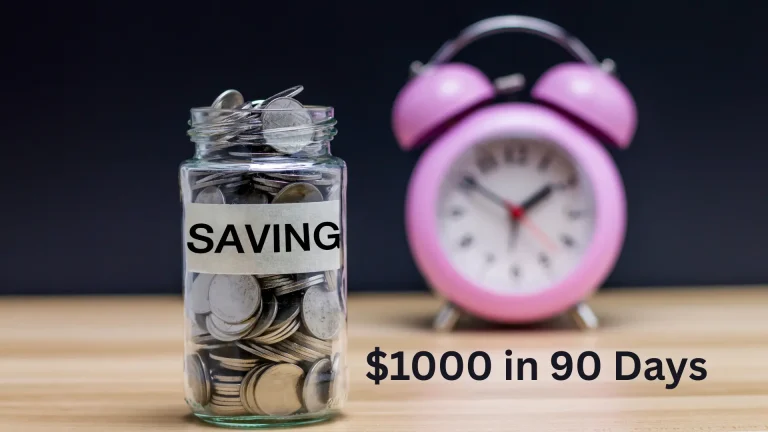

27 Tiny Habits That Save You $500/Month Without Feeling Broke

Last fact-checked: · Editorial standards
Saving money doesn’t have to mean giving up everything you love. These are the painless 27 tiny habits that save you $500/Month or more every month — without turning your life upside down. Start with just three or four and watch your savings grow.
27 Tiny Habits That Save You $500/Month
Habit 1: Brew Coffee at Home on Weekdays

Buying a coffee every morning might feel like a small treat, but at $5–$7 per cup, you could be spending over $100 a month just on your morning routine. Swapping your daily café run for a home-brewed cup on weekdays — and keeping the café as a weekend reward — is one of the simplest financial swaps you can make without feeling like you’re sacrificing anything meaningful.
This habit works because it doesn’t demand the full elimination of something you enjoy. You still get your café experience; you just make it intentional. Over four weeks, this single switch can save you $80–$100, and because you’re still enjoying coffee out occasionally, the habit feels sustainable rather than punishing. Pair it with a good travel mug, and your morning ritual becomes something to look forward to at home.
Habit 2: Cancel One Unused Subscription
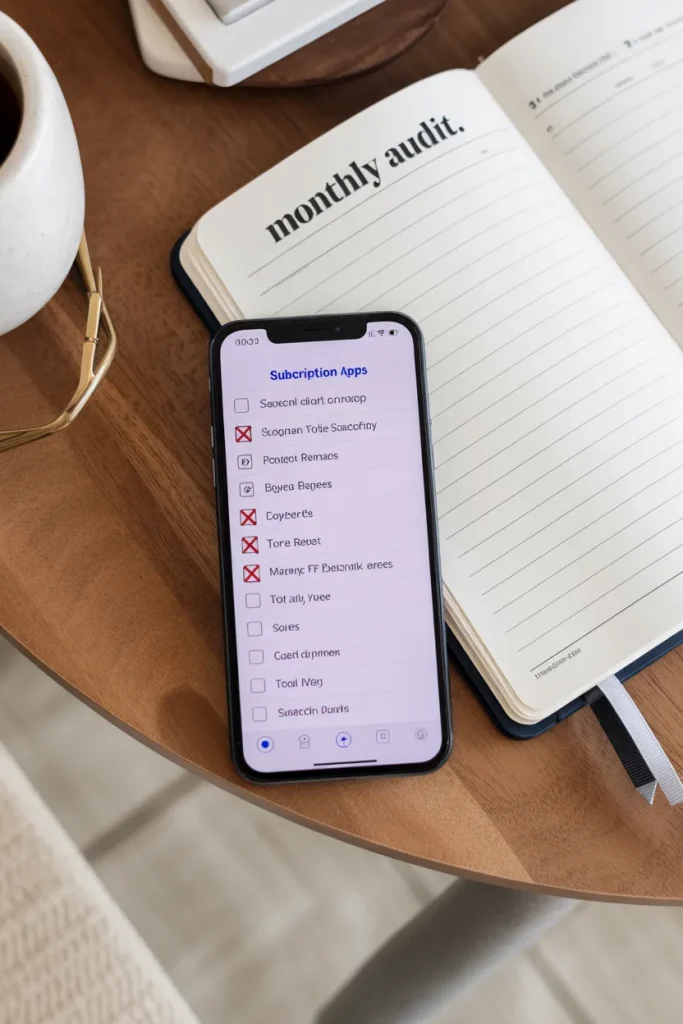
Most people are paying for at least two or three subscriptions they barely use. Streaming services, fitness apps, news sites, cloud storage upgrades — they all quietly renew each month and collectively drain $30–$80 from your account without you even noticing. Auditing your subscriptions once a month and canceling just one unused service is a two-minute habit that has an immediate impact on your monthly budget.
The key to making this a habit is scheduling a “subscription audit” on the first of every month — just five minutes to scroll your bank statement for recurring charges. You don’t have to cancel everything, only the ones you haven’t touched in 30 days. Over time, these micro-cancellations compound. Cancel one per month for six months, and you could save $30–$60 per month without changing a single thing about your lifestyle or entertainment.
Habit 3: Shop Groceries With a Written List

Walking into a grocery store without a list is one of the most expensive habits most people don’t realize they have. Without a plan, you rely on impulse decisions — you grab items on display, buy duplicates of things you already have, and toss in “just in case” purchases that expire unused. A simple written list, prepared at home before you leave, keeps you focused and cuts average grocery spending by 15–25%.
The trick is to build your list after checking what’s already in your fridge and pantry. This reduces both overspending and food waste in one move. Families and individuals who consistently shop with a list report saving $50–$100 per month on groceries alone. It takes less than five minutes to write, but it serves as a financial shield the moment you step into the store. Stick to the list strictly — every unplanned item is money leaving your savings goal.
Habit 4: Use the 24-Hour Rule Before Any Non-Essential Purchase

Impulse buying is one of the silent budget killers that most people underestimate. The solution isn’t willpower — it’s creating a built-in delay. The 24-hour rule means that whenever you feel the urge to buy something that isn’t on your planned list, you wait at least 24 hours before completing the purchase. Most of the time, that urgent desire fades completely on its own, and you realize you didn’t need it at all.
This habit is especially powerful for online shopping, where one-click purchasing makes impulse buys dangerously easy. Try adding items to your cart but not checking out — then revisit the cart the next day. Studies consistently show that a large majority of impulse purchases are abandoned when a cooling-off period is applied. Over a month, this single habit can prevent $50–$150 in unnecessary spending, turning those saved dollars directly into your bank account instead of someone else’s revenue.
Habit 5: Pack Lunch at Least Three Times a Week

Eating out for lunch at work can cost $10–$15 per meal, which adds up to $200–$300 per month if you do it every day. You don’t have to eliminate lunch outings — that would make the habit feel miserable. Instead, packing lunch just three times a week cuts that expense almost in half while still giving you the social and enjoyment benefits of eating out on the remaining days.
The easiest approach is cooking slightly extra at dinner time and packing the leftovers the night before. This takes almost zero additional effort and ensures your packed lunch is something you actually want to eat. Over a full month, packing lunch three days a week saves approximately $100–$130. It also tends to be healthier than restaurant meals, which means you may also be reducing healthcare-related costs in the long run — a double win for your budget and your body.
Habit 6: Automate a Small Weekly Savings Transfer
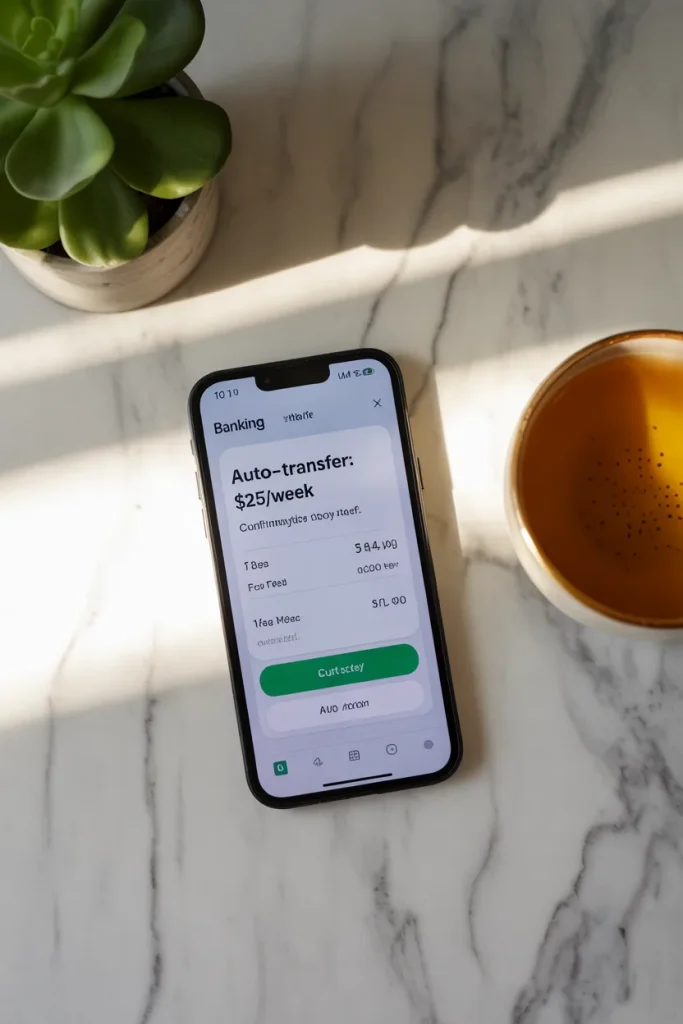
Saving money you can “see” in your checking account is psychologically difficult — your brain treats it as available to spend. The fix is to make saving invisible by automating a small weekly transfer to a separate savings account right after payday. Even $25 per week adds up to $100 per month and $1,300 per year — all without requiring a single conscious decision after the initial setup.
Start smaller than you think you need to. Set up a $10 or $15 weekly transfer and forget about it. After a month, when you notice your savings account growing without any effort, you’ll feel motivated to increase the amount. The key is that this money moves before you have a chance to spend it on something else. Over time, the habit of automatic saving becomes your financial foundation, and every raise or windfall you receive can be partially redirected here with minimal friction.
Habit 7: Switch to Store-Brand Products for Staples

Name-brand loyalty is one of the most expensive habits that sneaks into grocery budgets. For everyday staples — rice, pasta, canned goods, cooking oil, cleaning supplies, and over-the-counter medications — store-brand alternatives are manufactured to the same quality standards and often produced in the same facilities. Switching just 10–12 of your regular staples to store brands can save $20–$40 per grocery trip with zero noticeable difference in quality.
The psychology behind brand loyalty is largely marketing, not quality. A simple test: swap one product per week and compare. You’ll find that most store-brand staples are indistinguishable from their name-brand counterparts. Cleaning products, pantry basics, and medication generics are among the highest-savings swaps. Over a full month, a household that consistently chooses store brands for all staples can save $50–$80 without changing what they eat, clean with, or use daily. The savings are real; the sacrifice is minimal.
Habit 8: Meal Plan Every Sunday for the Week Ahead

A weekly meal plan is one of the highest-impact financial habits a household can build. Knowing exactly what you’ll cook each day eliminates the “I don’t know what’s for dinner” moment that almost always ends in takeout or a last-minute restaurant trip. Spending 15 minutes on Sunday mapping out five to seven dinners ensures your grocery list is precise, your food doesn’t spoil, and your food budget stays intact all week.
Meal planning reduces both grocery overspending and food waste simultaneously. The average household wastes approximately $1,500 worth of food per year — that’s $125 per month thrown in the bin. When you plan meals around what you already have and buy only what you need, waste drops dramatically. Combine this habit with shopping from a list (Habit 3), and you create a powerful system that can save $80–$120 per month from food costs alone — one of the single most impactful financial habits in this entire list.
Habit 9: Turn Off Lights and Unplug Idle Electronics
Phantom power — the electricity drawn by electronics that are plugged in but not in use — costs the average household $100–$200 per year. Televisions, phone chargers, microwaves, gaming consoles, and desktop computers all draw a small but constant current when plugged in. Developing the habit of unplugging devices you’re not using and switching off lights when leaving a room costs you nothing but a few seconds and adds up meaningfully on your monthly utility bill.
The easiest way to build this habit is to use power strips with on/off switches for your entertainment and home office setups. One click powers down every device at once. For lighting, smart bulbs with auto-off timers remove the need for willpower entirely. Combined, these small changes can reduce your electricity bill by $15–$25 per month — not dramatic in isolation, but when stacked with the other habits in this article, every saved dollar moves you closer to that $500 monthly target.
Habit 10: Use a Cashback or Rewards Credit Card (Paid in Full)
If you’re spending money anyway, you might as well earn something back from it. A good cashback credit card typically returns 1.5%–2% on every purchase — groceries, gas, utilities, and everyday expenses. For someone spending $2,000 per month, that’s $30–$40 back each month or $360–$480 per year, essentially free money for doing nothing differently. The only rule: pay your balance in full every month, so you never pay interest and erase the benefit.
The habit here is treating your credit card like a debit card — only spending what you already have in your account. Set up autopay for the full statement balance so you never accidentally carry a balance. Use one card for all regular expenses to maximize cashback accumulation. Over a year, disciplined cashback usage can generate a meaningful return that offsets other costs. Think of it as a built-in discount on every purchase you were already going to make, with no lifestyle change required.
Habit 11: Drink More Water, Less Soda and Juice
The beverage aisle is a surprisingly large drain on most household grocery budgets. Sodas, juices, energy drinks, and flavored waters are expensive relative to their nutritional value, and most households buy them out of habit rather than genuine preference. Shifting to tap or filtered water as your default drink — with the occasional treat beverage — can save a family $30–$60 per month without any real sacrifice to daily enjoyment or nutrition.
Beyond the financial benefit, drinking more water has well-documented health benefits that can reduce long-term medical costs. If plain water feels boring, add sliced lemon, cucumber, or mint for a refreshing upgrade at nearly zero cost. For those who love sparkling water, a one-time investment in a home carbonation device pays for itself within two to three months compared to buying canned sparkling water regularly. This is one of those habits where your wallet and your health both benefit from the same decision.
Habit 12: Do a Monthly “No-Spend” Weekend
Designating one weekend per month as a no-spend weekend is a powerful reset for your relationship with money. The rules are simple: no restaurants, no shopping, no paid entertainment for 48 hours. It sounds restrictive, but most people discover that their best weekends — hiking, cooking at home, board games, visiting a park — cost very little. One no-spend weekend per month typically saves $80–$150, depending on your normal weekend spending patterns.
The framing of this habit matters enormously. Instead of thinking of it as a restriction, frame it as a creativity challenge: what’s the most fun you can have this weekend without spending a dollar? You’ll likely rediscover free activities in your city, quality time with people you care about, and hobbies you’ve been neglecting. Over 12 months, 12 no-spend weekends can reclaim $960–$1,800 from your budget — one of the most impactful single habits on this list when practiced consistently.
Habit 13: Buy Secondhand Before Buying New
For clothing, furniture, books, kids’ items, and electronics, secondhand options are almost always available at a fraction of the retail price. Platforms like Facebook Marketplace, thrift stores, and secondhand apps make finding quality used items faster than ever. Committing to checking secondhand options first — before buying anything new over $20 — is a habit that can save hundreds of dollars per year without any meaningful reduction in quality or satisfaction.
The mindset shift required here is small but powerful: “secondhand first” becomes your default, and “brand new” becomes the exception reserved for items where condition genuinely matters. Children’s clothing, in particular, is an area where buying secondhand makes enormous financial sense since kids outgrow items so quickly. Furniture, fitness equipment, and textbooks are other high-savings categories. Over a month, this habit alone can save $30–$80, depending on your household’s typical spending on physical goods.
Habit 14: Plan Your Gas Errands in One Trip
Making multiple short car trips throughout the week instead of batching your errands into one efficient route is a quiet fuel budget killer. Every cold engine start and short trip uses disproportionately more fuel than longer consolidated drives. By grouping your weekly errands — grocery shopping, pharmacy, post office, school pickup — into one or two well-planned routes, you can reduce fuel consumption by 15–20% and add less wear to your vehicle simultaneously.
This habit is especially valuable as fuel prices fluctuate. Use a simple habit: each Sunday, write down every errand you need to run that week and plan the most efficient single-trip route. Apps like Google Maps make route optimization easy. Over a month, batching errands can save $15–$30 in fuel and extend the time between oil changes and tire replacements. It also saves time — a double benefit that makes this one of the easiest habits to maintain because the reward is immediate and tangible.
Habit 15: Review Your Bank Statement Once a Week
Most people check their bank balance but never actually read their statement line by line. A five-minute weekly review is one of the most financially empowering habits you can build because it forces awareness of exactly where your money goes. Fraudulent charges, forgotten subscriptions, accidental double charges, and creeping spending patterns only become visible when you look — and what you measure, you can manage. Make that weekly check your defense against surprise fees too: here is how to avoid overdraft fees and manage your checking account balance.
Set a recurring five-minute calendar event on Friday afternoon labeled “Money Check-In”. Scroll through every transaction from the past seven days and ask: was this planned? Was this worth it? Flag anything that surprises you. This awareness habit reduces unconscious spending over time as you become more deliberate about each transaction. People who track spending actively consistently report saving $50–$100 more per month simply because awareness changes behavior, even without any formal budget being followed.
Habit 16: Use Coupons and Cashback Apps for Groceries
Digital coupons and cashback grocery apps have made saving money at the supermarket more accessible than ever. Apps like Ibotta, Rakuten, or store-loyalty apps offer real cashback on items you already buy — you simply scan your receipt and the savings are deposited directly. Spending five minutes before your grocery run to check available offers can save $10–$30 per trip without changing a single item on your shopping list.
The habit is simply adding “check the app” to your pre-shopping routine. Stack cashback apps with your store’s own loyalty program discounts for maximum savings — this is often called “stacking” and can dramatically increase the return on everyday spending. Over a month of consistent grocery shopping with cashback habits, a family can realistically save $40–$80. These savings feel genuinely effortless because you’re buying the same products you always would — you’re simply getting paid a portion back for doing it.
Habit 17: Negotiate Your Bills Annually
Most people pay their service bills — internet, insurance, phone — on autopilot without realizing that nearly every provider has room to negotiate. A single 15-minute phone call to your internet or insurance provider once a year, asking for a loyalty discount or threatening to switch, can result in $10–$30 per month in savings. Multiplied across two or three bills, that’s $300–$1,000 per year recovered from companies that were quietly overcharging loyal customers. For your auto policy specifically, here is how to save money on car insurance without reducing coverage.
The script is simple: call, say you’ve been a loyal customer, mention you’ve found a cheaper competitor, and ask if they can do better. Most retention departments have the authority to offer discounts on the spot because retaining an existing customer costs them far less than acquiring a new one. Always call; don’t rely on chat or email for this. Set a calendar reminder every 12 months to repeat this call for each of your recurring bills. The discomfort of a short phone call pays extraordinary financial dividends.
Habit 18: Set a Specific Weekly Dining-Out Budget
Rather than cutting restaurants out of your life, the smarter approach is to set a fixed, guilt-free weekly dining-out allowance. Decide on Sunday how much you’ll allow for eating out that week — perhaps $40 or $50 — and stop the moment it’s used. This habit preserves the social and enjoyment aspects of dining out while placing a firm ceiling on what had previously been an open-ended expense that drifted higher every month without notice.
Treating dining out as a budgeted line item rather than a spontaneous expense removes the emotional cycle of guilt and overindulgence. When you know you have $40 this week, you make more intentional choices: maybe a nice lunch instead of dinner, or one restaurant trip instead of three. People who set explicit dining budgets consistently report spending 30–40% less on food without feeling like they’ve given up their social life. That’s a realistic saving of $60–$100 per month from this one habit alone.
Habit 19: Air-Dry Clothes Instead of Using the Dryer
The clothes dryer is one of the most energy-intensive appliances in the average home. Running it multiple times per week adds $15–$30 to your monthly electricity bill. Air-drying clothes on a rack or line, either indoors or outdoors, costs absolutely nothing and is gentler on fabrics — meaning your clothes last longer before needing replacement. This habit is especially impactful for households that do four or more loads of laundry per week.
Even partially air-drying — letting clothes dry 70% on a rack before finishing in the dryer for 10 minutes to soften them — reduces energy consumption significantly. Combine this with washing clothes in cold water (which works just as well for most loads), and you can reduce your laundry-related utility costs by $20–$35 per month. Over a year, that’s $240–$420 saved from one of the least disruptive habit changes possible. Your clothes will thank you, and so will your electricity bill.
Habit 20: Track Every Purchase, No Matter How Small
Small, frequent purchases — coffee, snacks, apps, parking, convenience items — are the hardest spending to control because each one feels trivial in isolation. Tracking every single expense, even $1.50, creates a complete and honest picture of where your money actually goes. Most people are genuinely shocked when they first do this, discovering $80–$150 in small daily spending they had no awareness of. Awareness is the first and most powerful step toward changing behavior.
You don’t need a complicated system. A simple notes app on your phone where you log each purchase in real time is enough. After two weeks, review your log and categorize spending. You’ll identify specific “leaky” categories — perhaps convenience store stops, app purchases, or vending machine drinks — that you can reduce with minimal effort. People who actively track spending typically reduce their monthly expenditure by 10–15% in the first month without making any other deliberate changes, simply because visibility changes choices.
Habit 21: Choose Free Entertainment Options Weekly
Entertainment spending — streaming services, cinema tickets, concerts, sporting events — can quietly consume $100–$200 per month. Building a weekly habit of intentionally choosing one or two free entertainment activities replaces some of that spending without eliminating enjoyment. Libraries, public parks, free community events, hiking trails, free museum days, and at-home movie nights are all genuinely enjoyable experiences that cost nothing and are available in almost every city.
The habit is to actively plan your free entertainment each week rather than defaulting to paid options. On Sunday, spend two minutes looking up free events in your area or planning a free activity you’ve been meaning to try. When free options are planned and anticipated, they stop feeling like a compromise and start feeling like a choice. Over a month, replacing even two paid entertainment outings per week with free alternatives saves $40–$80 while often creating richer, more memorable experiences than passive streaming or crowded commercial venues.
Habit 22: Use the Library Instead of Buying Books
Books, audiobooks, and magazines are wonderful — but buying them new every time is an expensive habit for avid readers. A free library card gives you access to physical books, e-books through apps like Libby, audiobooks, magazines, and in many cities, access to streaming services, online courses, and digital newspapers. The modern library is one of the most underutilized free resources available, and switching to it can save $20–$60 per month for regular readers.
The habit shift is simple: before purchasing any book, check if your library has it — physical, digital, or audio. Most libraries offer a free app that lets you borrow ebooks and audiobooks directly to your phone within seconds. For people who currently subscribe to Audible, Kindle Unlimited, or multiple magazine apps, replacing those subscriptions with a library card is an immediate saving of $20–$50 per month. Over a year, that’s $240–$600 recovered for doing something you already love — just through a different, completely free channel.
Lower Your Thermostat by 2°F in Winter
Heating and cooling account for roughly 40–50% of most household energy bills. Lowering your thermostat by just 2°F (approximately 1°C) in winter — especially during sleeping hours and when the house is empty — can reduce your heating bill by 5–10% without any noticeable comfort difference. If you use a programmable or smart thermostat, this adjustment can be automated, so it requires zero ongoing effort once configured.
The habit is to treat your thermostat setting as a financial dial, not just a comfort preference. Every degree of reduction saves money. Supplement the small temperature drop with warmer socks, a blanket on the couch, or a warm drink in the evening — micro-comforts that cost almost nothing but keep you cozy. In winter months, this single adjustment can save $15–$30 per month on heating. In summer, raising the cooling setpoint by 2°F achieves the same result in reverse. Year-round, smart thermostat habits can save $180–$360 annually.
Habit 24: Prep Snacks at Home to Avoid Vending Machines
Vending machine and convenience store snacks are marked up 200–400% compared to the same items bought in bulk at a grocery store. If you’re buying snacks or drinks at work, at the gym, or while running errands two or three times per week, you may be spending $20–$40 per month on items that would cost $5–$10 if purchased in advance and packed from home. Prepping a small snack bag each morning takes less than two minutes.
The key is keeping easy grab-and-go snacks pre-portioned and ready in your kitchen. Nuts, fruit, granola bars, crackers with peanut butter, and homemade trail mix are all portable, satisfying, and cheap when bought in bulk. On Sunday, portion out your week’s snacks into small zip bags or containers so each morning requires zero thought — just grab and go. This habit saves time, reduces hunger-driven impulse food purchases, and keeps $20–$40 per month in your pocket instead of in a vending machine.
Habit 25: Use a High-Yield Savings Account
If your savings are sitting in a standard checking account or a traditional savings account earning near-zero interest, you’re leaving free money behind. High-yield savings accounts (HYSAs) offered by online banks routinely offer interest rates 10–20 times higher than those of traditional banks. On a $5,000 savings balance, the difference between a 0.01% and a 4.5% annual rate is roughly $224 in free interest per year — money that requires absolutely no behavioral change to earn.
The habit is a one-time action with a permanent financial reward. Open a high-yield savings account (many have no fees and no minimums), transfer your existing savings to it, and link your automatic transfer from Habit 6 to this account. After that, you simply earn more interest on the money you were already saving. This habit pairs perfectly with all the other savings habits in this article — every dollar you save through reduced spending earns more simply because it lives in the right account.
Habit 26: Declutter and Sell Unused Items Monthly
Most households are sitting on hundreds of dollars worth of items they no longer use — clothing, electronics, furniture, toys, books, and appliances. Selling just a few of these items each month through Facebook Marketplace, eBay, or local selling apps converts clutter directly into cash. A single monthly decluttering session of 30 minutes that results in even two or three sales can generate $30–$80 in extra income — effectively free money from things that were otherwise gathering dust.
The habit is scheduling a monthly “sell something” session on a fixed day. Walk through one room per month and identify items you haven’t used in six months. List them with clear photos and honest descriptions. Over time, you’ll also develop a healthier relationship with purchasing — knowing you’ll eventually have to sell something you buy makes impulse purchases feel less appealing. This habit creates both extra income and a natural barrier against accumulating new, unnecessary possessions going forward.
Habit 27: Review and Adjust Your Budget Every Month
A budget you set once and never look at again is just a wish list. The most financially successful people treat their budget as a living document — reviewing it at the end of each month, comparing what they planned to what actually happened, and adjusting for the month ahead. This 15-minute monthly habit catches overspending before it becomes a pattern and creates a continuous feedback loop that gradually tightens your financial management over time.
Use a simple template: list your income, your fixed expenses, and your variable spending categories. At month’s end, check actuals against your plan in each category. Categories that consistently overshoot need either a higher allocation or a behavioral change. Categories where you underspent offer extra money to redirect toward savings or debt payoff. People who review their budgets monthly are significantly more likely to achieve savings goals than those who set a budget and forget it. This habit is the engine that makes all the other 26 habits work together.
Putting It All Together
You don’t need to adopt all 27 habits at once. Pick three from this list that feel easiest for your current lifestyle and start there. Once those feel automatic — usually within three to four weeks — add two or three more. Stacking these habits gradually creates a compounding effect: each new habit reinforces the others, and before long, you’ll find $500 or more staying in your account every month without your life feeling any smaller or less enjoyable.

Sarah Whitman is the founder and lead editor of Keen Pocket. She holds a BS in Accounting and Finance and writes plain-English guides on budgeting, saving, debt, and beginner investing.